
Casino payment methods for Aussies in 2026: what still works and what quietly died
 Available in AU

Two things broke the Australian casino cashier, and both happened quietly. POLi shut down on 30 September 2023, taking with it the bank-transfer button that half the country had learned to click. Then, on 11 June 2024, the credit-card ban commenced in full. Between them they removed the two defaults most Australians had used for a decade, and a lot of guides still haven’t caught up.
What replaced them is better, mostly. PayID moves money in about the time it takes to lock your phone. Crypto pays out faster than anything a bank will touch. Neosurf gives you a spending ceiling you physically cannot exceed. But the landscape now has traps that didn’t exist before, and the biggest one is not a fee or a delay — it is a method that happily takes your deposit and then cannot send anything back.
That asymmetry is the thread running through everything below. You are not picking a payment method. You are picking two: one to get money in, one to get it out. Get that pair wrong and you’ll discover it at the worst possible moment, which is the moment you’ve won something.
The short answer on Aussie casino payments in 2026
PayID first, crypto for speed, Neosurf for discipline. That is the whole hierarchy for the overwhelming majority of Australian players, and everything else on the list is either a fallback for a specific situation or a rail that looks available and isn’t.
The reason PayID sits at the top is not marketing. It is the only option that is simultaneously instant, denominated in AUD, free at both ends, and able to run in both directions. Crypto beats it on withdrawal speed and nothing else. Cards are familiar and slow to pay back. Vouchers are excellent at exactly one job. Wallets are a mess of listings that don’t match reality, which gets its own section further down because it deserves one.
Here is the full field, with the numbers that matter rather than the ones operators like to advertise.
| Method | Deposit speed | Withdrawal | Typical cost | Best for |
|---|---|---|---|---|
| PayID / Osko | Under a minute | Yes, same day common | Free at both ends | Everyday deposits and payouts |
| Bitcoin, Ethereum, Litecoin, USDT | Minutes, by network confirmation | Yes, fastest of any rail | Network fee only | Getting paid quickly |
| Neosurf | Instant | No — deposit only | Face value, no markup | Hard budget caps and privacy |
| Visa / Mastercard debit | Instant when it clears | Yes, several business days | Free, bank-dependent | Familiarity, small deposits |
| BPAY | Next business day | No — one direction only | Free | Large amounts above a PayID cap |
| Australian bank transfer | One to three business days | Yes, one to three days | Free at most banks | Payout destination of last resort |
| Paysafecard | Instant | No — deposit only | Face value | Small sessions, no bank trace |
| CashtoCode | Instant on payment | No — deposit only | Set at the cashier | Paying cash without buying a voucher first |
| MiFinity | Instant | Yes, one to three days | Published schedule, modest | The wallet slot that actually functions |
| Jeton | Instant | Yes where offered | Low headline fees | Cheap wallet transfers when present |
| MuchBetter | Instant | Yes where offered | Modest | Phone-bound security |
| AstroPay | Instant | Depends on operator | Wallet-side fees apply | Reaching merchants a local card won’t |
| Apple Pay | Instant | No | Inherits the funding card | One-tap deposits on iPhone |
| Google Pay | Instant | No | Inherits the funding card | One-tap deposits on Android |
Read that withdrawal column twice. Five of those fourteen entries cannot return your money at all, and two more depend entirely on what the operator has configured. That is the shape of the market now.
What is the best payment method for online casinos in Australia?
PayID, for almost everyone. It settles in under a minute through Australia’s real-time payments network, costs nothing at either end, runs in AUD, and supports withdrawals as well as deposits. Crypto pays out faster if that is your single priority. Neosurf wins only when a hard spending cap matters more than getting paid back.

What changed: POLi is gone, credit cards are out
Both disruptions get misreported, and the misreporting matters. One was a commercial decision by a payments company. The other was an act of parliament with a scope much narrower than the headlines suggested. A reader who understands the difference can predict which of their cards will work; a reader who doesn’t will keep getting declines they can’t explain.
The commercial one first. POLi was Australian-built, owned by Australia Post, and for years it was how you moved money from a bank account to a gambling site without handing over a card number. It closed. Not restricted, not limited — closed, with no successor product. Anything still advertising it in 2026 is either an abandoned page or a site you should back away from slowly.
The legislative one is more interesting because its actual reach is smaller than almost every guide claims. The Interactive Gambling Amendment (Credit and Other Measures) Act 2023 — Act No. 76 of 2023, assented on 6 December 2023 — commenced in full on 11 June 2024. It prohibits credit cards, credit-related products and digital currency as payment methods for regulated interactive wagering services. Those last three words carry the weight, and the sections below unpack what they exclude.
| Method | Status in Australia | Why | What to use instead |
|---|---|---|---|
| POLi | Closed 30 September 2023 | Australia Post shut the Australian arm; no successor | PayID |
| PayPal | Contractually unavailable | PayPal’s own AU policy bars gambling payments without seller approval | PayID or MiFinity |
| Credit cards | Banned for regulated wagering, bank-blocked elsewhere | Act No. 76 of 2023 plus merchant-category blocking since 2020 | Visa or Mastercard debit |
| Klarna, Zip, Afterpay | Not available anywhere on AU cashiers | Credit-related products, screened out at the acquiring layer | Neosurf for spend control |
| Trustly | Never reached Australia | No Australian bank coverage; the rail serves Europe and North America | PayID |
| Interac | Never reached Australia | Canadian domestic rail | PayID |
| iDEAL | Never reached Australia | Dutch domestic rail | PayID |
| UPI | Never reached Australia | Indian domestic rail | PayID |
| ACH / eCheck | Never reached Australia | United States banking rails, no AUD leg | Bank transfer |
| Boku, SMS deposits | Not offered | No Australian carrier bills gambling to a phone account | Neosurf |
POLi
POLi worked by asking you to log into your internet banking inside a POLi-hosted window. The service read your account details from that session and pushed the transfer on your behalf. Technically it was screen-scraping, and functionally it meant a third party held your banking credentials for the duration of a payment. Several Australian banks had already restricted or removed support before the closure for precisely that reason — Commonwealth Bank pulled out ahead of the shutdown, and others tightened access.
Australia Post ended Australian operations on 30 September 2023. There was no direct replacement, and none was needed: PayID had been live since 2018 and did the same job better, with no credentials leaving your bank and settlement measured in seconds rather than a redirect chain. If you learned to deposit from a guide written before late 2023, POLi is the reason your instructions no longer match the cashier in front of you. Nothing to mourn. The rail that replaced it is faster and doesn’t ask for your banking password.
PayPal
PayPal is not banned in Australia and never was. It simply refuses this business. PayPal’s Australian acceptable-use policy states that account holders may not use PayPal to send or receive payments for any form of gambling activity — wagers, gambling debts, gambling winnings — unless PayPal has specifically approved the seller. No casino serving Australian players holds that approval.
The distinction matters because the consequence is different from a declined card. A declined card is a dead end and nothing more. A payment that breaches an acceptable-use policy is a violation on your account, and PayPal’s remedy is to limit or close it. You would be risking the wallet you use for everything else in your life for a deposit that a banking app handles in under a minute for free. The trade is absurd, and the sites listing PayPal as an Australian casino option are listing a global product menu, not the screen your account will actually see.
Credit cards
Here is where the two mechanisms separate, and where nearly every competing guide collapses them into one wrong sentence.
Mechanism one is the statute. Act No. 76 of 2023 prohibits credit cards, credit-related products and digital currency as funding methods for regulated interactive wagering services from 11 June 2024. “Regulated” means licensed — the Australian sportsbooks and race-betting operators that hold state and territory licences. Offshore casino sites are not regulated interactive wagering services; under the Interactive Gambling Act 2001 they are prohibited services, which is a different category entirely. The 2023 amendment was not written at them, which is exactly why some of them still display card and crypto tiles as if nothing happened.
Mechanism two is the banks, and this is the one that actually stops your transaction. Since 2020, Australian card issuers have blocked gambling-coded transactions on credit products at the merchant-category level. That block does not care whether the merchant is a licensed sportsbook or an offshore cashier — it cares about the merchant category code attached to the transaction. Every major Australian bank applies it.
Two mechanisms, one outcome: your credit card will not fund a casino deposit. But knowing which mechanism is which explains something the “credit cards are banned” version cannot. It explains why your debit card sometimes fails too. Debit is not covered by the statutory ban and is not blocked as a class, yet the same merchant-category machinery sits in the payment path, and individual banks apply their own fraud and risk rules on top of it. A decline is not evidence you did something illegal. It is evidence your bank’s rules for that category fired. And no, routing the same credit card through a phone wallet changes nothing — a credit card inside Apple Pay is still a credit card, tokenised.
Klarna, Zip and the rest of the buy-now-pay-later crowd
Buy-now-pay-later is credit with better branding, which puts it inside the “credit-related products” wording of the 2023 amendment. That much is straightforward. What makes this the one method class where the legal answer and the availability answer agree for once is that BNPL providers also screen gambling merchants out at the acquiring layer, independently of any Australian legislation. They don’t want the chargeback profile.
So there is no cashier to check and no workaround to find. Klarna appears in Australian search results at all only because it is genuinely present on European casino sites, and keyword tools don’t respect borders. If deferring the cost is the appeal, the honest read is that a payment method designed to let you gamble money you don’t have yet is precisely what the 2023 Act existed to remove. Neosurf achieves the opposite goal — a fixed amount, paid upfront, incapable of overspending — and it is available today.
Can I still use POLi at an Australian online casino?
No. POLi ceased Australian operations on 30 September 2023 and has no successor product. Any casino or guide still listing it is out of date. PayID took over the same job — instant bank-to-bank deposits from your own banking app — without handing your internet banking credentials to a third party.

The rails Australian banks built
Three domestic rails survive, and they are not interchangeable. One is instant and bidirectional, one is slow with a very high ceiling, and one is the plumbing that always works when everything else has failed. Most players only need the first, but knowing the other two saves a bad afternoon.
What they share is that no card network sits in the path. That removes the merchant-category problem entirely — these are bank-to-bank transfers, and your bank treats them as transfers rather than as gambling card purchases. It is the structural reason the local rails have taken over the Australian market since 2023.
PayID and Osko
PayID is an addressing layer, not a payment system. You register a mobile number, email address or ABN against your bank account, and the addressing service resolves that alias to a BSB and account number when someone pays it. The payment itself travels over Osko, which runs on the New Payments Platform — Australia’s real-time settlement infrastructure, live since 2018, connecting more than 120 banks, financial institutions and fintechs and carrying somewhere around six billion dollars of payments every day.
For a deposit, you open your banking app, pay the operator’s PayID alias, and the funds arrive typically in under a minute — including across different institutions and including weekends, because the platform has no overnight batch window. Your bank credentials never reach the operator. The casino never sees a BSB or an account number you didn’t choose to expose. Some payments get held briefly under scam-protection rules, which is a feature rather than a fault, and it resolves itself.
Now the part almost nobody tells you, and it is the single most useful thing in this section. Osko payments and payments to a PayID sit inside your own online banking daily payment limit — Westpac states this in its own customer FAQ, and every other bank applies the same logic. So when a cashier advertises a A$10,000 daily PayID cap and your deposit bounces at A$3,000, the operator is not the problem. Your bank’s default outbound limit is. Those defaults vary enormously between institutions, and the conservative ones ship low. Raising the limit takes about three minutes in most banking apps, and it is worth doing before you need it rather than at the moment a transfer fails.
Withdrawals run the same rail in reverse, which is what separates PayID from every voucher on this page. Same-day payouts are routine at operators with an automated approval queue, and the rail itself contributes almost nothing to the delay — what you are waiting on is the operator’s review, not the transfer.
BPAY
BPAY predates PayID by roughly two decades and works on completely different principles. It is a bill-payment rail, run by BPAY Group, which is collectively owned by the four major banks — Commonwealth Bank, NAB, Westpac and ANZ. You pay a Biller Code, which identifies the recipient, plus a Customer Reference Number, which identifies which account inside that recipient gets credited.
The mechanics are batch, not real time. You initiate from your banking app, the payment queues in your bank’s outgoing BPAY batch, the batch processes overnight, and the funds land the next business day. Occasionally two, if the receiving end has a slower matching cycle. Nothing about this is fast, and nothing about it was ever meant to be — the rail exists for electricity bills, where an overnight window is fine.
What BPAY has instead is headroom. Default per-day BPAY limits at most Australian banks are substantially higher than default PayID limits, in several cases by an order of magnitude. That makes it the sensible fallback for one specific situation: you want to move an amount above your PayID daily limit and you can’t or won’t raise that limit in time. BPAY is also one-directional by design — it moves money from a payer to a biller and has no return leg — so it can never be your withdrawal method. Two practical cautions: only a minority of Australian-facing cashiers support it at all, and operators typically expire the reference number within 24 to 48 hours, so a payment initiated on a Friday afternoon can miss its own window over a weekend.
Plain bank transfer
The unglamorous one. A direct entry transfer to a BSB and account number, the same mechanism that has moved Australian money since long before any of this existed. One to three business days each way, free at most banks, and the highest default daily limits of any consumer rail at several institutions.
Its real value is as a destination rather than a source. Plenty of operators will accept a deposit by one method and pay out by bank transfer, because bank transfer is the only route they can be certain reaches every Australian player. If your deposit rail is a voucher, this is very often where your winnings are actually going to land, whether you nominated it or not. Worth knowing before you assume the money comes back the way it went in.
One recent improvement deserves a mention, because it closes the main gap between plain transfers and PayID. Confirmation of Payee launched industry-wide in 2025 and checks the account name against the BSB and account number before the payment leaves — Australian Payments Plus reported more than 150 million uses in its first year. Before that, a mistyped digit on a BSB transfer was your problem and nobody else’s. Now you get told the name doesn’t match before you send. Use it. It is a free consumer-side check that costs you one extra glance at a screen.
How long does a PayID withdrawal actually take?
The transfer itself takes under a minute. What you actually wait on is the operator’s approval queue and your own verification status. With identity checks completed in advance and an automated approval process, same-day payouts are normal and sub-hour payouts are common. With documents outstanding, the fastest rail in the country still sits behind manual review.
Crypto: the only rail nobody can refuse
Crypto’s speed advantage gets explained badly almost everywhere, usually with some hand-waving about how blockchains are fast. Blockchains are not especially fast. What makes crypto the quickest way to get paid by an offshore casino is structural, and once you see it you can’t unsee it: on the payout leg, there is no bank in the path with the power to say no.
Every other withdrawal route on this page terminates at a financial institution that has to accept the incoming payment. That institution has rules about gambling, rules about cross-border flows, rules about merchant categories, and a fraud system with opinions. Each of those is a place where your money can stop. An on-chain withdrawal has none of them. The operator pushes the transaction and the network settles it, and no third party in between holds a veto.
Cryptocurrency: BTC, ETH, LTC and USDT
The four you will actually meet in an Australian-facing cashier are Bitcoin, Ethereum, Litecoin and Tether. Your on-ramp from AUD is a digital currency exchange, and in Australia those providers are registered with and supervised by AUSTRAC — which is worth knowing because it means the “unregulated wild west” framing is a decade out of date at the exchange layer, whatever is true of the casino at the other end. You buy, you send to the cashier’s deposit address, and the balance credits once the network has produced the required number of confirmations. Litecoin and Tether on a low-fee network clear in minutes. Bitcoin during congestion can take considerably longer, and paying a higher fee is how you fix that.
On the legal position, the 2023 amendment’s prohibition on digital currency binds regulated interactive wagering services — the same narrow scope that applies to its credit-card provisions. Offshore casino sites sit outside that category, which is the unglamorous reason their crypto tiles are still there.
The costs are network fees and nothing else. No percentage to a processor, no currency conversion spread hidden in a rate, no monthly account charge. That genuinely makes it the cheapest rail here for larger amounts. The offsetting risk is price movement between buying the coin and using it, and the fix is boring and effective: use a stablecoin. Tether is pegged, so the amount you bought is the amount you deposit and the amount you withdraw. Volatility is a reason to pick your coin carefully, not a reason to avoid the rail. One further piece of context if you plan to convert winnings back to cash: AUSTRAC’s threshold transaction reporting applies to transfers of A$10,000 or more in physical currency, lodged by the reporting entity within ten business days. Nothing about that is a problem for you. It is simply not a secret channel, and anyone selling it as one is selling something else.
Is it legal for me to deposit at an offshore casino from Australia?
The Interactive Gambling Act 2001 creates offences for operators providing or advertising prohibited services to Australians, not for individual players using them. There is no penalty aimed at you for depositing. What you do lose is any Australian regulatory recourse if an offshore operator refuses to pay, because no domestic body licenses them.
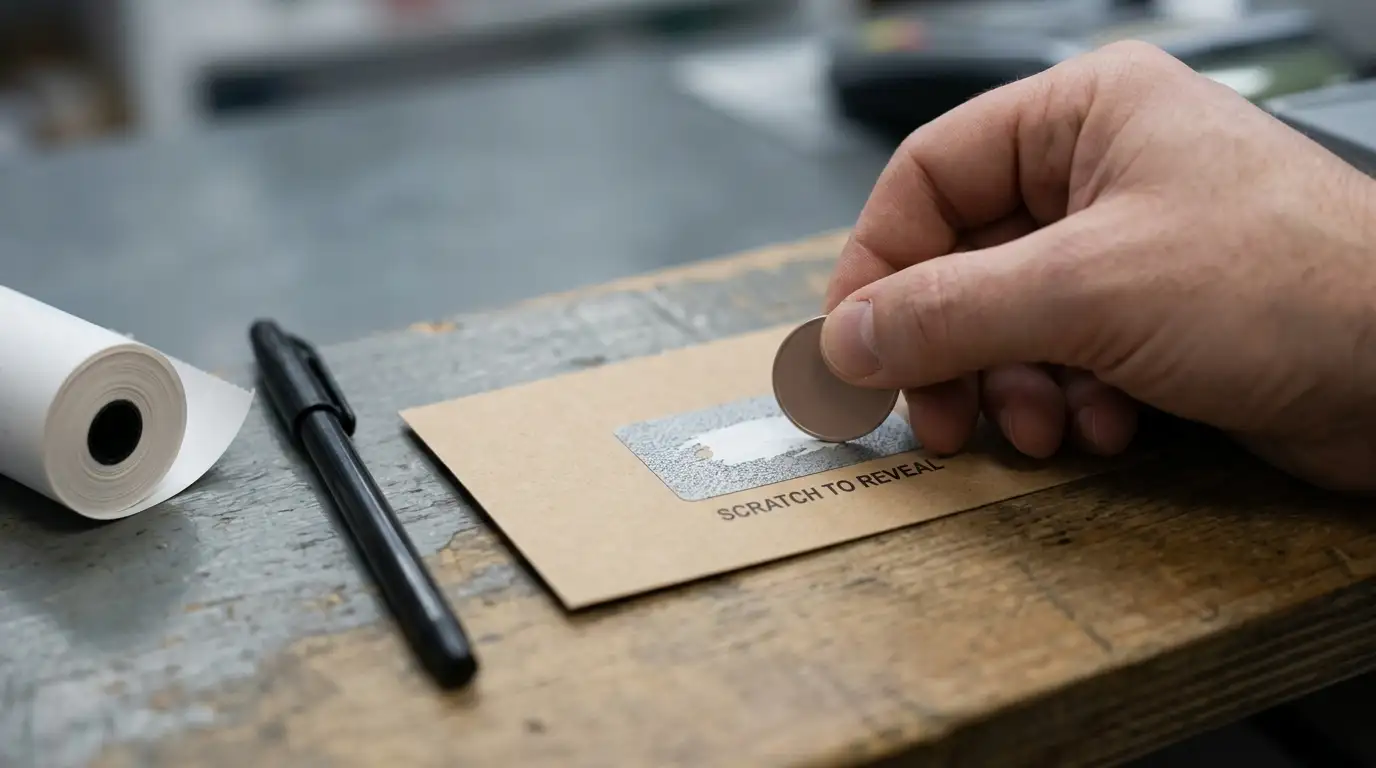
Cash in an envelope: prepaid vouchers
Vouchers solve a problem no digital rail can touch. They put a ceiling on your spending that exists in the physical world rather than in your intentions. You buy fifty dollars, you deposit fifty dollars, and the account cannot go further because there is nothing further to draw on. No linked card to reach for at midnight, no bank balance sitting one tap away.
They also keep gambling off your bank statement entirely, which matters to more people than the industry likes to admit — shared accounts, mortgage applications, or simply not wanting a lender’s automated categoriser to see the word “casino” thirty times.
The price of both benefits is the same and it is non-negotiable: none of these three can pay you back. They are one-way doors. Deposit with a voucher and your winnings leave by a completely different route, chosen by the operator if you haven’t chosen it yourself.
Neosurf
Neosurf is a French prepaid voucher system and the dominant cash-based option on Australian-facing cashiers. You buy a voucher at retail — select Coles stores, some 7-Eleven outlets, Australia Post outlets and a wide network of independent newsagents — and receive a PIN. Enter the PIN at the cashier and the balance credits instantly. Australian face values commonly run A$10, A$20, A$30, A$50 and A$100, and at network-authorised resellers the voucher costs exactly its face value. A$50 buys A$50. No markup, no processing fee.
Because no bank and no card network appears anywhere in that transaction, Neosurf is immune to every merchant-category block discussed earlier. It cannot be declined by your bank because your bank isn’t involved. For a player who keeps hitting card declines, that alone is the answer.
One cost is worth avoiding. Neosurf also sells a wallet product, myNeosurf, which lets you load voucher value into a persistent balance you can spend across multiple sites. Loading a voucher into that wallet costs 4.5%. On a hundred dollars that is four dollars fifty for convenience you probably don’t need — if you deposit at one operator once or twice a month, the wallet never earns its fee back. Buy the voucher, enter the PIN at the cashier, skip the wallet. The straight path is the free one, and the fees only appear when you step off it.
Paysafecard
Paysafecard is the same idea from a different corporate family — it belongs to the Paysafe group, which also owns Skrill and Neteller. PIN-based, instant, deposit-only, sold online and at retail. Mechanically there is very little daylight between it and Neosurf.
Where they diverge is in practical reach and in ceiling. Per-voucher caps sit tighter than Neosurf’s upper range, which is fine for a modest session and irritating if you wanted to move a few hundred dollars in one go. Australian casino coverage is also patchier, and publicly verifiable detail on exactly which Australian-facing cashiers carry it currently is thinner than for Neosurf — so the honest instruction is to look at the cashier before you buy a PIN, not after. Note too that the same corporate caution which has effectively removed Skrill and Neteller from Australian gambling use sits behind this product as well. Nothing suggests the voucher is going anywhere, but the group’s appetite for Australian gambling traffic is not enthusiastic.
CashtoCode
CashtoCode inverts the voucher flow, and the inversion is genuinely useful. Instead of buying a fixed denomination and hoping it matches what you wanted to deposit, you start at the cashier: you enter the amount, the system generates a barcode or code, and you take that to a participating retailer and pay it in cash. The balance credits on payment. No bank account, no card, no wallet registration at any point.
The advantage over Neosurf is precision — you are not forced into the nearest available face value, so a A$70 deposit is a A$70 deposit rather than a A$50 voucher plus a A$20 voucher. The disadvantage is coverage. The Australian retail network accepting CashtoCode is narrower than Neosurf’s, so the binding constraint isn’t the mechanics but whether there’s a participating outlet near you. Check that before you generate a code, since operators expire them. And like every voucher here, it is a deposit rail only.
Which casino payment methods can’t be used for withdrawals?
Neosurf, Paysafecard and CashtoCode are deposit-only — vouchers have no return leg. BPAY is one-directional by design. Apple Pay and Google Pay have no payout function either. If you deposit by any of these, nominate a withdrawal rail separately: usually PayID, crypto or plain bank transfer.
Cards and the wallets that wrap them
Debit cards are still legal, still present in cashiers, and still the method most new players reach for first. They are also the slowest of the mainstream options at getting money back to you, and the most likely to fail for reasons the casino cannot explain and your bank won’t.
The phone wallets sit in this section rather than in one of their own, and that placement is deliberate. It is the taxonomy every other guide gets wrong.
Visa and Mastercard debit
An Australian-issued debit card is not covered by the 2023 credit-card ban. Debit is your own money, the statute targets credit, and no legislation prevents you using one. Deposits clear instantly when they clear at all.
The failure mode is worth understanding, because it is invisible from the casino’s side. Your transaction gets coded to the gambling merchant category on its way through the card networks, and your issuing bank then applies its own rules to that category. Some banks pass it. Some decline it. Some pass it on Tuesday and decline it on Friday because a fraud model updated. The operator sees a rejected authorisation and can tell you nothing useful, and the live chat agent guessing at reasons is genuinely guessing. If your debit card fails twice in a row, the answer is not to try a third time — it is to use a rail your bank treats as a transfer instead of as a gambling purchase.
On the payout side, card withdrawals go back to the same card as a credit, which routes through the card networks’ refund machinery rather than a direct transfer. That is why “several business days” is the honest estimate while PayID does the same job before you’ve closed the app. Cards remain a reasonable starting point for a first small deposit. They are a poor choice as your withdrawal rail.
Apple Pay
Apple Pay is not a payment method. It is a presentation of a card you already have, tokenised so the merchant receives a device-specific token instead of your card number. Face ID or Touch ID replaces typing sixteen digits, which makes the deposit faster to complete — not faster to settle.
Everything that constrains the underlying card constrains Apple Pay identically. If your bank blocks gambling-coded transactions on that card, the block applies here too, because it is the same card and the same merchant category. A tokenised credit card is still a credit card. What Apple Pay genuinely adds is that the operator never receives your card number, which is a real privacy improvement and worth having. What it cannot add is speed or acceptance that the card underneath doesn’t have. And there is no withdrawal leg, so a payout rail has to be nominated separately.
Google Pay
The Android-side equivalent, and for your purposes the differences are cosmetic. Google Pay tokenises a stored card, authenticates on the device, and deposits instantly when the funding card clears. The tokenisation implementation differs, the device coverage differs, and the practical consequence for your money is identical: it inherits every restriction of the card behind it and it cannot pay you out.
Both wallets are also heavily listed and inconsistently present. An aggregator database showing Apple Pay at a brand is describing a payment stack that exists somewhere in the world, not a tile your Australian account will find in the cashier.
Why won’t my card work at an online casino?
Almost always your bank, not the casino. Credit cards are banned for regulated wagering and blocked by Australian banks on gambling merchant categories since 2020. Debit cards are legal but travel through the same category coding, so individual banks decline them under their own risk rules. Switch to PayID.

E-wallets: the listings lie
This is the section where the gap between what the internet says and what your cashier shows is at its widest, and where a reader can waste a genuinely irritating amount of time opening accounts that will never work.
The mechanism behind the confusion is mundane. Cashier software is built once and shipped globally, so the method list an aggregator database records is the full menu that exists somewhere in the world. It is not the screen an Australian account renders. When a review site tells you a brand accepts Skrill, it is usually reading that global menu rather than logging in from Melbourne and looking.
Independent cashier checks across ten Australian-facing brands in mid-2026 — Slots Gallery, Crownslots, Stonevegas, Neospin, Boho Casino, Neon54, CrownPlay, Lucky Ones, Spinline and RollXO — found the rails on display to be PayID, Bitcoin, Ethereum, Neosurf and Visa, with Litecoin additionally at Boho. Aggregator databases listed Skrill and Neteller at all ten. Neither appeared on a single one.
| Wallet | On AU cashiers in practice | Withdrawals | Fee position | Verdict |
|---|---|---|---|---|
| Skrill | Listed everywhere, found on none | Irrelevant — restricted | Moderate | Don’t bother |
| Neteller | Listed everywhere, found on none | Irrelevant — restricted | Moderate | Don’t bother |
| MiFinity | Present at a real share of brands | Yes, one to three days | Published schedule | The functioning wallet option |
| Jeton | Occasionally present | Yes where offered | Lowest headline fees | Use if offered, don’t chase |
| MuchBetter | Occasionally present | Yes where offered | Modest | Good if you want phone-bound security |
| AstroPay | Sometimes present | Operator-dependent | Wallet-side fees apply | Niche, check costs first |
Skrill
Skrill belongs to Paysafe, and Paysafe’s own documentation is why it doesn’t work here. Skrill’s support pages state plainly that UK- and Australian-issued credit cards cannot be used on gambling sites, and that money deposited with a credit card cannot be used on UK or Australian gambling sites. Only a handful of countries carry those restrictions. Australia is one of them.
The terms of use go further than the help centre. Skrill’s terms make it strictly forbidden to pay any entity offering illegal gambling services, with a country list that is expressly non-exhaustive, and they place the responsibility for keeping each transaction legal in your jurisdiction squarely on you. Providing online casino services to Australians is an operator-side offence under the Interactive Gambling Act, which drops an offshore casino payment from an Australian Skrill account into exactly the forbidden category. The remedy Paysafe reserves is suspension or closure of your wallet. So the realistic outcome of pursuing Skrill is not a fast withdrawal — it is a frozen balance and a support ticket. Worth adding: a widely repeated “exit date” for Skrill’s Australian gambling support circulates on affiliate sites with no primary source behind it, so treat the precise date as folklore. The restriction is real and years old; the anniversary is invented.
Neteller
Two logos, one rulebook. Neteller shares Paysafe’s parentage and its support pages carry the same wording about Australian-issued credit cards and card-funded balances on gambling sites. Anything true of Skrill above is true here, and the listings treat them as two independent choices purely because they have separate brand pages.
Neteller’s genuine strength in markets where it functions is withdrawal speed — often within a day, which is respectable. That is completely beside the point from Australia, where the transaction shouldn’t be attempted. For the historical record, Paysafe pulled its prepaid Mastercard from roughly a hundred countries including Australia back in November 2016, which is the earliest hard marker of the group’s retreat from this market. The direction of travel has been consistent ever since.
MiFinity
MiFinity is the wallet that actually occupies the slot Skrill and Neteller vacated. It operates through entities regulated by the UK’s FCA and Malta’s MFSA, supports multi-currency accounts including AUD, and publishes its fee schedule openly rather than burying it in a help article.
Functionally it does what a wallet is supposed to do: instant deposits once the balance is funded, withdrawals back to the wallet typically within one to three business days, and a layer of separation between your bank and the casino. It is slower than PayID in both directions and there is no scenario where it beats crypto on payout speed. Its case is the specific one where you want a buffer between your bank account and a gambling merchant — for statement reasons, for account-separation reasons, or because you deposit across several operators and prefer one funding point. Availability still varies brand to brand and month to month, so the cashier page remains the only authority on whether it is there today.
Jeton
Jeton is a challenger wallet competing chiefly on price, with two products: the Jeton Wallet balance and a Jeton Cash voucher variant that gives it a prepaid path as well. Deposits are instant, wallet transfers are quick, and the headline fees undercut the established players.
Acceptance is the constraint. Australian-facing coverage is thin and inconsistent, and publicly verifiable Australian detail is limited compared with MiFinity’s — which is itself informative about how much volume flows through it here. The sensible position: if a cashier you already use offers Jeton and the fee comparison favours it, take it. Opening a Jeton account speculatively, in the hope that the operators you want will support it, is effort spent on a maybe.
MuchBetter
MuchBetter is built around a phone rather than a card, and that is the whole proposition. The wallet lives in an app, authentication is bound to the device, and each transaction is confirmed in the app itself. There is no card number for a merchant to store because the credential is the handset.
For a player whose main anxiety is card details sitting in an offshore operator’s database, that architecture answers the concern more completely than tokenisation does. Deposits are instant and withdrawal support exists where the operator has configured it. The catch is the familiar one: Australian acceptance is narrower than MiFinity’s, and hard Australian-specific figures are sparse enough that any guide quoting precise limits here is extrapolating. Treat it as a good option to take when you find it, not a plan to build a bankroll around.
AstroPay
AstroPay is a hybrid — a wallet with a linked prepaid-card presentation — and it was built to solve exactly the problem Australians have. Its original markets were places where domestic cards struggle to reach cross-border merchants, so it funds locally and presents to the merchant as a card-like credential. Deposits are instant, and withdrawal support depends on what the operator has switched on.
The place to scrutinise it is the fee layer. Charges and limits are set inside the AstroPay account rather than by the casino, which means the cashier page will tell you nothing useful about what the transaction actually costs you. Read them in the wallet before your first deposit, not after your first withdrawal. Used with that homework done, AstroPay is a legitimate route past a stubborn card. Used casually, it is a rail whose costs you discover late.
Do payment methods affect bonus eligibility?
Frequently, yes. Operators commonly exclude certain wallets and prepaid routes from welcome offers, and the exclusion is buried in the bonus terms rather than shown in the cashier. Check the terms for a named list before your qualifying deposit, because a “generous” welcome package you’ve accidentally disqualified yourself from is worth precisely nothing.

Pairing your in-rail and your out-rail
Here is the part the rest of the internet skips, and it is the only decision on this page that can actually cost you money rather than time.
You need two rails, not one, and you should choose them in reverse order. Start with the out-rail — how your winnings come back — because that decision is constrained, consequential and hard to change once you’re mid-session. Then pick an in-rail that suits it. Most players do this backwards: they choose a deposit method for convenience, discover at withdrawal time that it has no return leg, and take whatever the operator offers them by default. Which is usually a bank transfer, three business days out, exactly when patience is thinnest.
Only three rails are genuinely reliable in both directions from Australia. PayID, crypto, and plain bank transfer. Debit cards technically qualify but pay out slowly enough that they don’t belong in the same tier. Wallets qualify where the operator has configured them and where the wallet itself permits Australian gambling use — which, per the section above, disqualifies the two most-listed names on the market.
So the pairing logic reduces to something short enough to hold in your head. If speed is the priority, both legs are crypto — deposit in USDT, withdraw in USDT, and nothing in the path can decline either. If you want everything in AUD and never want to think about coins, both legs are PayID, and you accept that the payout waits on the operator’s approval queue rather than on the rail. If you want a hard spending cap, the in-rail is Neosurf and the out-rail must be nominated separately, which in practice means PayID or bank transfer — and you set that up on day one rather than at cash-out. If you’re moving an amount above your bank’s PayID daily limit and can’t raise it, the in-rail is BPAY and the out-rail is bank transfer, and you plan around next-business-day settlement in both directions.
One more thing determines your payout time more than the rail does, and it is entirely under your control: verification. Complete identity checks the day you register, not the day you win. An operator with an automated approval queue can push a PayID withdrawal in minutes for a verified account, and will hold the identical withdrawal for a manual review cycle if documents are outstanding. The fastest rail in the country still waits behind paperwork. Front-load the paperwork.
And while we’re being blunt about money — the “free spins” and “VIP treatment” attached to your first deposit are marketing expenses with a repayment schedule attached, not gifts. A casino is not a charity and has never once mailed anyone a cheque out of affection. The wagering terms are where the generosity gets clawed back, and the payment rail you chose has nothing to do with whether that arithmetic works in your favour. It doesn’t. What the rail controls is how fast the money moves and what it costs you in transit, which is the only part of this you can actually optimise.
What is the cheapest way to move money in and out?
PayID and plain bank transfer are free at both ends at most Australian banks. Crypto costs network fees only, which makes it cheapest for larger amounts. Vouchers cost nothing at face value if you skip the wallet products. E-wallets and card payouts are where percentage fees quietly appear.

Safety, verification and the paperwork nobody reads
“Secure payment method” is a phrase that does very little work, because the risks in this chain are not evenly distributed. The rail itself is rarely the weak point. Australian bank rails and major card networks are hardened infrastructure with fraud systems that most players will never test. The exposure sits at the other end — with an offshore operator holding your money and your identity documents, under a licence from a jurisdiction with no obligation to you.
That shapes what “safe” should mean here. A rail that never gives the operator reusable credentials is safer than one that does, which is the practical argument for PayID, vouchers and tokenised wallets over typing a card number into a cashier form. A rail whose payout leg can’t be blocked by a third party is safer in a different sense, which is the argument for crypto. Neither protects you from an operator that simply refuses to pay, and no payment method ever will.
On verification: KYC checks are a legal obligation for the operator, not an obstacle invented to delay you, and treating them as an early administrative task rather than a late fight is the single highest-leverage thing you can do for your own payout speed. Have identity and address documents ready. Register in the name on your bank account — a mismatch between your account name and your casino registration is one of the most common causes of a held withdrawal, and it is entirely avoidable.
One free tool deserves your attention because it is new enough that most players don’t know it exists. Confirmation of Payee, live industry-wide since 2025, checks the account name against the BSB and account number before your payment leaves. Australian Payments Plus reported over 150 million uses in the service’s first year. When you send a bank transfer to a payment processor’s account details, that check tells you whether the name matches what you were expecting. It is not a licence check and it won’t tell you whether an operator is trustworthy. It will tell you whether the account you’re paying belongs to who you think it does, and that is worth the two seconds it costs.
Why a payment option disappears from a cashier overnight
You will eventually open a cashier and find that a rail you used last month is gone. This is normal and it is almost never about you. Operators don’t hold direct relationships with most of these rails — they contract with payment processors who aggregate them, and those processors add, drop and re-route methods depending on approval rates, fees and their own banking relationships. A processor loses a bank, and a tile vanishes from a hundred cashiers the same week. It reappears when the processor finds a replacement.
The practical consequence is that no single method deserves your loyalty. Keep a second working rail configured and verified, because the question is when your primary blinks out, not whether.
Playing within your own limits
Payment rails make surprisingly effective guardrails, and they work when intentions don’t. A voucher enforces a ceiling in hardware — the money isn’t there, so it can’t be spent, and no amount of late-night conviction changes that. A deposit limit set in your account is a similar mechanism, and it is deliberately harder to reverse than to set. Both work precisely because they take the decision away from the version of you that would make it worse.
If you’re picking rails to avoid a bank statement rather than to save on fees, that is worth sitting with honestly. The privacy argument for vouchers is legitimate for plenty of reasons. It is also the argument someone makes when the spending has become something to hide, and only you know which applies. Free, confidential support is available in Australia on 1800 858 858, twenty-four hours a day. Gambling is entertainment with a negative expected value — that is the design, not a malfunction — and the only reliable way to win at payment methods is to move money you had already written off.
Casino Deposit Methods Australia 2026 — Compared
Content created by the «PokiePay» team