
Casinos that accept Tether in Australia: the 2026 shortlist, chain by chain
 Available in AU
Casinos that accept Tether in Australia: the short answer
Almost every crypto casino reachable from Australia accepts USDT in 2026. The useful questions are narrower: which chain the cashier supports, how fast it pays, whether ID gets demanded at withdrawal, and whether the domain is already sitting on an ACMA blocking order. Acceptance is table stakes now.
That shift happened fast, and the industry noticed before the guides did. Stablecoins made up roughly 58% of all crypto deposits at Curaçao-licensed casinos by 2025, up from under 30% two years earlier, and projections put them above 70% of crypto betting transactions this year. Bitcoin’s share of crypto wagering fell from 88% to 77% during 2025 alone. Tether absorbed most of that migration. So when a site advertises “we accept USDT,” it is telling you approximately nothing — the equivalent of a pub advertising that it serves beer.
What separates one Tether casino from another is mechanical. A site that takes USDT only on Ethereum will quietly cost a small depositor a fifth of their deposit in gas. A site with a 5,000 euro monthly withdrawal cap that tightens once you are up will feel very different at the cashier than in the sign-up flow. And a site that ACMA ordered blocked last quarter is a site you can still deposit at through a VPN, and a site you will have a genuinely bad time getting money out of. The table below ranks ten operators on those grounds, and each one gets a proper look further down.
| Operator | Licence | USDT networks | Min deposit | Payout window | Distinguishing feature |
|---|---|---|---|---|---|
| CoinCasino | Curaçao (Anjouan number also cited) | ERC-20, TRC-20, BEP-20 | $25 quoted; $10 on some regional pages | 5–10 minutes | Only shortlisted site pairing all three chains with card rails |
| BC.Game | Anjouan, migrated from Curaçao | ERC-20, TRC-20, BEP-20 | $1 | 15–35 minutes measured | 150+ coins, lowest entry, worst payment record |
| Betplay | Costa Rica | ERC-20, TRC-20 | 5 uBTC | 10 minutes–3 hours | 8,000+ games and real multiplayer poker tables |
| Cryptorino | Costa Rica | ERC-20, TRC-20 only | $10 | 1–3 hours | 70+ studios, and no BEP-20 support at all |
| Wild.io | Curaçao-family offshore | USDT plus 12+ coins | $5 | Around 10 minutes | Up to 70% rakeback with no wagering attached |
| Instant Casino | Anjouan | TRC-20, BEP-20 | $20 | 5–10 minutes | 15x unlock condition against a 40–80x field |
| BetPanda | Disputed, see breakdown | USDT plus 13+ coins | 0.1 uBTC | 51 seconds–4 minutes measured | Fastest measured payouts, weakest governance signals |
| Punkz | Offshore, detail sparse | USDT plus majors | $20 | Minutes | Bonus accrues across wagers instead of landing on deposit |
| Vave | Curaçao-family offshore | USDT plus 10+ coins | $20 | Minutes to hours | Verification demanded before the first withdrawal |
| Thrill | Offshore, detail sparse | USDT plus majors | $20 | Minutes | Provably fair titles as the core catalogue, not a side room |
One column that deliberately is not in that table: a trust score. Every ranking page in this space publishes one, and every one of them sits between 9.5 and 10 out of 10 for all ten brands, which tells you what the number is for. The breakdowns below say the awkward things instead.
The USDT casinos worth a look from Australia
Order here follows usefulness for Tether play specifically — chain coverage and payout reliability first, thin-data newcomers last. It is not a quality ranking, and two of these ten carry warnings serious enough that they appear despite their placement, not because of it.
CoinCasino
Launched in 2024, CoinCasino runs roughly 4,000 games with Microgaming, Evolution and NetEnt supplying the bulk of the catalogue, plus round-the-clock live dealer tables and a sportsbook on the same wallet. Its licensing is where things get muddy. One source lists it as Curaçao; another investigates an Anjouan licence carrying the number ALSI-142311005-FI2. Both cannot be the current position, and the operator’s own presentation does not resolve it cleanly. Worth knowing before you decide how much comfort a licence line gives you.
For Tether specifically it is the strongest of the ten, because it takes USDT on all three networks — Ethereum, TRON and BNB Chain — and reportedly absorbs the standard blockchain fee on withdrawals. Card and wallet rails sit alongside crypto, so a player without any USDT can start with Visa and switch later. The welcome offer reads 200% up to $30,000 with 50 spins, and here the paperwork contradicts itself: the review body says 60x wagering, the bonus table on the same page says 40x. Assume the higher figure until the cashier tells you otherwise. There is no phone support, and the minimum deposit is quoted at $25 in one place and roughly ten USDT on its own regional pages, which is a A$21 difference on a first deposit — small, but the kind of thing that decides whether a stated minimum is real.
BC.Game
The oldest brand on the list by a wide margin, operating since 2017, and the most technically capable: 150+ cryptocurrencies, USDT on all three chains, around 4,000 games including roughly 76 exclusive titles, and a genuine spread across blackjack, baccarat, roulette, craps, pokies, live dealer, game shows and crash. Entry is a single dollar. The four-tier welcome package reaches $1,600 plus 400 spins at 40x, which is mid-field rather than punishing. Measured Bitcoin and Litecoin payouts landed in 15 to 35 minutes across four withdrawals.
Now the part the ranking pages omit. BC.Game’s licence moved to Anjouan after court proceedings in Curaçao, and independent trust reviews cite more than $2.1 million in unpaid player claims. Withdrawals are capped at 10,000 euros a month, and that ceiling drops to 5,000 euros once your balance exceeds ten times what you have deposited — the limit narrows at precisely the moment you start winning, which is an elegant piece of design if you are the house. Bitcoin.com’s own review, which rates the product highly, describes it as the site in its coverage with the most serious payment history. Deposit accordingly, and treat a large balance sitting on-site as a decision rather than a default.
Betplay
Running since 2020 under a Costa Rica registration, Betplay carries the largest catalogue here at over 8,000 titles, and it is the only site on this list with real multiplayer poker tables rather than video poker against a machine. The sportsbook is extensive, and USDT works on both Ethereum and TRON. Deposits start at 5 uBTC. Cashback, VIP tiers and occasional rakeback for VIP players round out the promotional side.
The bonus terms are the harshest shortlisted: 100% up to 50,000 uBTC at 80x, and that turnover has to be cleared within seven days. Do the arithmetic before you opt in, because a week is not long to push eighty times a bonus through pokies at a sustainable stake. Payout window runs from ten minutes to three hours, the widest spread on the list, which in practice means the fast end applies to small unremarkable withdrawals and the slow end applies to anything that trips a manual review. Costa Rica, worth saying plainly, is a company registration rather than gaming regulation — there is no gambling regulator behind it to complain to.
Cryptorino
Also a 2024 arrival on a Costa Rica registration, Cryptorino leans on breadth of supply: over 6,000 games from more than 70 studios, with live blackjack, roulette, baccarat, craps and game shows alongside the pokies, plus a sportsbook. Registration needs no ID. Ten coins are supported including both USDT and USDC. The welcome offer is 100% up to 1 BTC with 10% cashback at 60x, entry at $10, and it will match VIP status you have earned at a rival — an unusual and checkable perk if you are arriving with tier standing elsewhere.
It also supplies the cleanest illustration of why chain-checking matters: Cryptorino supports USDT on Ethereum and TRON, and does not support BEP-20. Send BNB Chain Tether to its deposit address because you assumed all three chains work everywhere and that money is gone. Not delayed. Gone. Payouts run one to three hours, which is slow by 2026 crypto standards but consistent, and consistency at the cashier is worth more than a headline number.
Wild.io
Live since 2022, Wild.io supports a dozen-plus coins and puts casino, live tables, in-house Originals and a sportsbook behind a single wallet. Minimum deposit is $5, second-lowest here. An independent review classes it as a mid-tier operator with no market-specific adaptation, which is a fair description — nothing about the site is built for Australians in particular.
Its structural difference is the reward model. Instead of a deposit match, Wild.io runs up to 70% rakeback plus 10% cashback, with no wagering requirement attached to the rakeback. For anyone putting real volume through in USDT, that is arithmetically better than a bigger headline number carrying 60x. A 200% match up to $30,000 sounds enormous next to “70% rakeback” until you notice that the first one needs $12,000 of turnover to release $200 of bonus and the second one pays you back a slice of every wager with no strings. The “generous” welcome package is generous to the operator’s acquisition numbers first. Cashouts land around ten minutes.
Instant Casino
Anjouan-licensed, launched 2024, and stocked by Evolution and Pragmatic Play among others across table games, live dealer, provably fair titles, pokies and jackpots. USDT works on TRON and BNB Chain. It also carries a fiat on-ramp — buy in with Visa or Mastercard if you hold no crypto — with the trade-off stated openly: the card route will generally trigger identity verification that the crypto route does not.
The reason it earns a spot is one number. Its welcome offer is 200% up to 7,500 euros with 10% cashback, and the unlock condition is 15x to release 25% of the bonus, against a field running 40x to 80x. That is the single largest difference in terms across all ten operators, and it is the difference between a bonus you might realistically clear and one that exists to pad a comparison table. Deposits start at $20, payouts clear in five to ten minutes, and geo-restrictions apply, so check that Australia is served before you fund anything.
BetPanda
Launched in 2023, operated by Star Bright Media SRL and based in Curaçao, BetPanda offers over 6,000 games, 13-plus cryptocurrencies, 30-plus sports markets and Bitcoin Lightning support. It is crypto-only — no card fallback — and there is no mobile app. On raw speed it is the best performer documented here: a Litecoin withdrawal cleared in three minutes forty seconds and a Lightning payout in fifty-one seconds under independent timing.
Its licensing is genuinely disputed, and that matters more than the payout speed. One source lists Costa Rica; another review states flatly that the platform holds no UKGC, MGA, Curaçao or Anjouan licence, and notes that SSL encryption, certified studios and provably fair technology are technical measures rather than regulatory ones. Casino Guru rates it 5.4 out of 10, “Below Average,” with explicit notes that the operator does not follow several fundamental best practices — a rating that sits oddly beside the 10/10 it receives on affiliate ranking pages. Wagering on the welcome offer is 80x. Fast money out is only a feature while the site is willing to send it.
Punkz
Punkz structures its offer differently from everything else here, and that is the reason to look at it. Rather than crediting a match when you deposit, it accrues up to $20,000 of bonus across consecutive wagers, at 40x with a $20 entry. Onboarding to first spin takes a couple of minutes.
For a steady-volume player that structure is friendlier than it looks: nothing large lands in your account with strings attached, so nothing large is sitting there restricting withdrawals while you clear turnover you never wanted. For a one-off depositor testing a site with A$100 it is close to worthless, since the accrual never reaches a meaningful figure. Public licensing detail on Punkz is sparse — thinner than for any of the majors above — and that absence is itself information. A site that does not make its regulator easy to find has usually made a decision about how much scrutiny it wants.
Vave
A newer Curaçao-family entrant, Vave takes USDT plus ten-odd other coins and offers 120% up to $5,000 with 75 spins at 40x, entry $20. On paper it is unremarkable in a field of unremarkable welcome offers.
It earns its place as the clearest documented case of the pattern that runs through this entire market. Vave lets you register, deposit and play with no ID at all, then requires mandatory verification before your first withdrawal. Independent no-KYC trust reviews describe that as a bait-and-switch against the anonymous positioning, and the description fits: the frictionless part is the part where money flows toward the house, and the paperwork appears at the exact moment money is meant to flow back. Public specifics beyond bonus terms and the verification requirement are thin, so treat the rest of the proposition as untested rather than assume it is fine.
Thrill
Thrill is a newer USDT site built around provably fair titles as the main catalogue rather than a novelty section beside the pokies, and it offers up to 70% wager-free rakeback as an alternative to conventional sign-up bait. The headline welcome package is 150% up to 1 BTC plus 100 spins at 50x with a $20 minimum. Licensing and ownership detail available publicly is limited — genuinely limited, not merely inconvenient to find — so the honest position is that the product looks coherent and the operator behind it is largely unproven. For a site holding irreversible deposits, unproven is a material fact, and a small first deposit followed by a test withdrawal is worth more than any rating.
How long does a USDT withdrawal actually take?
Measured payouts on these sites range from under a minute to three hours. BetPanda cleared Lightning in 51 seconds and Litecoin in under four minutes; BC.Game took 15 to 35 minutes; Cryptorino runs one to three hours. Manual review adds 12 to 48 hours on larger amounts or unverified accounts, which is where most delay actually comes from.
TRC-20, ERC-20 or BEP-20: the choice that costs you money
Same token, three delivery routes, wildly different economics. USDT exists simultaneously on several blockchains, and the network you pick determines what the transfer costs, how long it takes, and — if you get it wrong — whether the money arrives at all.
| Network | Typical fee | Confirmation | Operator support | Best used for |
|---|---|---|---|---|
| TRC-20 (TRON) | $0.81–$8.45 | Under 60 seconds | Most crypto casinos | Default choice for any deposit size |
| ERC-20 (Ethereum) | $2–$50+, gas-dependent | 1–5 minutes | Widest of the three | Larger deposits where a fixed fee is proportionally small |
| BEP-20 (BNB Chain) | Under $0.50 | Under 30 seconds | Thin and inconsistent | Only after confirming the cashier accepts it |
TRC-20 (TRON)
TRON carries roughly $165.5 billion of issued USDT, more than Ethereum’s float, and that dominance is not accidental. Fees run about $0.81 to $8.45 depending on your wallet’s energy balance and network conditions, confirmation lands inside a minute, and most crypto casinos support it. TronLink is the usual wallet. For an Australian depositing anything from A$50 to A$5,000, this is the rail — it is the cheapest option that is also reliably supported, which is a combination the other two chains each miss on one side.
ERC-20 (Ethereum)
The original USDT implementation, around $102.7 billion issued, and the most broadly compatible across exchanges, wallets and gambling platforms. The problem is gas. Fees range from $2 to well over $50 depending on congestion, and that cost is fixed per transaction regardless of what you are sending. Pay $40 of gas on a $100 deposit and you have handed over 40% of your bankroll before a single spin resolves — a worse deal than any house edge on the site. On a $5,000 transfer the same $40 is under 1% and the calculus flips entirely. MetaMask is the standard wallet.
BEP-20 (BNB Chain)
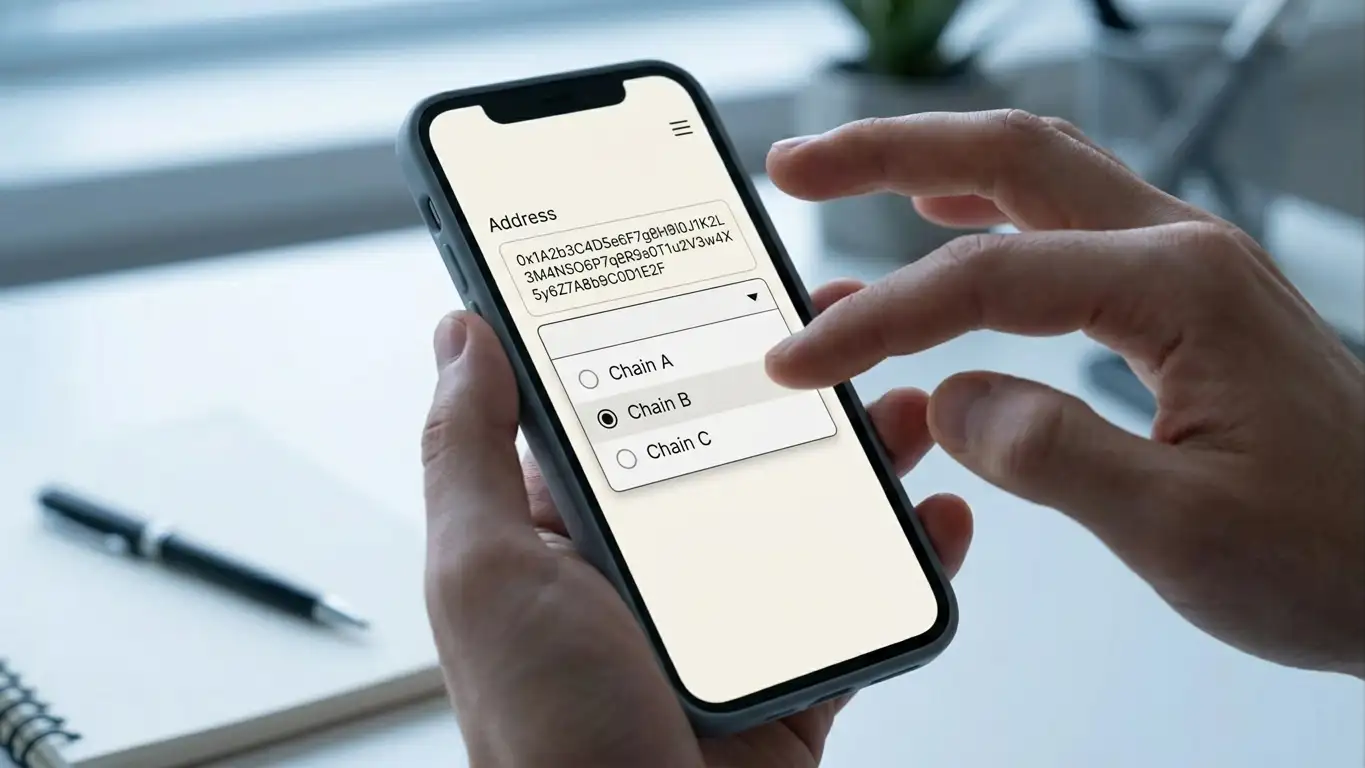
Cheapest and fastest of the three: under fifty cents, confirmed in under thirty seconds. The catch is support, which is thin and inconsistent in a way that is genuinely dangerous. Of the operators above, CoinCasino and Instant Casino take BEP-20; Cryptorino does not. There is no pattern to infer from — you check the specific cashier of the specific site before you send, every time, and if the deposit page does not list BNB Chain explicitly then it does not accept BNB Chain.
Which USDT network should I use to deposit at a casino from Australia?
TRC-20 on TRON, in almost every case. Fees sit around a dollar, confirmation takes under a minute, and support is near-universal across crypto casinos. Use ERC-20 only for large deposits where gas is proportionally trivial. Use BEP-20 only after confirming in the cashier that the site accepts BNB Chain.
What happens if I send USDT on the wrong network?
The funds are almost always unrecoverable. Sending TRC-20 Tether to an ERC-20 deposit address, or the reverse, puts the tokens somewhere neither the casino nor your wallet provider can reach. No support desk can reverse a blockchain transaction. Verify the network three times: copying the address, pasting it, and confirming the send.

What the Interactive Gambling Act actually says about you
The Interactive Gambling Act 2001, in its compilation as amended on 11 June 2024, makes online casino gaming a prohibited interactive gambling service in Australia. It does that by creating offences for the people offering the service. Not for the person placing the bet. That distinction is the whole legal picture in one sentence, and it is the sentence most pages in this space either fudge or skip.
NSW GambleAware, which is an official state channel rather than a ranking site, spells out the categories without ambiguity. Illegal in Australia: online casino-style games including roulette, blackjack and baccarat, online pokies, live in-play sports betting, and any overseas gambling site or app not licensed here. Legal, through Australian-licensed operators only: online sports and race betting, and lotteries. Which means every single site listed further up this page is, from the Australian regulator’s point of view, an illegal service — and none of them are breaking a law that applies to you when you deposit at them.
What you give up is not liberty. It is recourse. Licensed Australian operators are obliged to run identity checks, offer safer-gambling tools, apply spending limits and use secure payment systems, and they answer to Australian law when they fail. GambleAware lists what happens without that backstop, and the list is specific: depositing money and then being unable to withdraw winnings, sites closing suddenly with funds still inside, unauthorised withdrawals from bank accounts, and no customer support or recovery path. Read the BC.Game and BetPanda breakdowns above with that framing and the unpaid-claim figures stop looking like trivia.
Why no Australian USDT casino exists
Because the licence does not exist. There is no Australian licence for online casino play, there never has been, and no reform currently proposed would create one. ACMA does not license online casinos — it maintains the register of licensed interactive gambling providers, which covers wagering, and it runs a blocked-domain enforcement regime. State and territory regulators handle land-based casinos and domestic wagering. Search the register for a Tether casino and you will find nothing, not because the paperwork is slow but because the category is prohibited.
So any operator accepting USDT from an Australian is offshore by structural necessity, and “licensed Tether casino” resolves to “licensed somewhere that is not here.” Those licences carry real differences in weight, covered below, but none of them is an Australian licence and no amount of professional web design changes that. The licensed Australian wagering brands — Sportsbet, TAB, Ladbrokes and their peers — are the legal alternative, and they take neither crypto nor casino bets. There is no overlap. That is the trade the whole page sits on.
What an ACMA block does to your balance
Since issuing its first blocking request in November 2019, ACMA has had more than 1,700 illegal gambling and affiliate websites blocked, and more than 230 offshore services have withdrawn from the Australian market under the same enforcement pressure. Published counts vary by announcement date across 2025 and 2026, so treat the figure as the order of magnitude ACMA itself reports rather than a precise ledger.
The blocks are DNS-level, applied by Australian internet providers. Practically, the site stops resolving. Your balance is not seized, frozen or transferred anywhere — the money sits in the operator’s system exactly where it was, and you have simply lost the normal route to it. A VPN restores access, and doing that puts you outside every protection at once while often breaching the operator’s own terms, which is a poor position to be in when you are the one asking for a payout. If a site you hold funds at gets blocked, withdrawing promptly beats waiting to see what happens.
Names matter here, because this is where the recommendation pages fall down. ACMA’s blocking orders have named Fortunica, Rolletto, Velobet, Lucky Mate, Vegastars, Wombet, Cosmobet and Fortune Play for offering unlicensed casino-style services to Australians, and a later order covered twelve more domains including 7Signs and Chromabet. Fortunica was appearing in promotional banners on Australian-facing casino pages while under order. Meta continued serving illegal crypto-casino advertising after an ACMA warning, and two former AFL players were caught promoting illegal online casinos to their followings. The enforcement record is public; the pages recommending these brands to Australians simply do not consult it.
Reading an offshore licence
Not all of them mean the same thing, and the ranking pages tend to present them as a flat list of reassuring words. Curaçao is the longest-established and the most substantive of the group, restructured in recent years under a stricter regime. Malta is genuinely demanding and correspondingly rare among crypto-native operators — if you see an MGA licence on a USDT casino, that is a real signal. Anjouan is newer and lighter-touch, which is why several brands migrated there. Kahnawake sits in the middle with North American and European history behind it.
Costa Rica deserves separate treatment because it is not a gaming licence at all. It is a company registration in a jurisdiction that does not regulate online gambling, which means there is no gaming authority auditing the operator and no regulator to escalate a dispute to. Betplay and Cryptorino both run on it. That is not a reason to avoid them outright, but it does mean the word “licensed” in their marketing is doing work it has not earned, and any dispute is a conversation with the operator’s own support desk and nobody else.
Is it illegal for an Australian to play at a casino that accepts USDT?
No. The Interactive Gambling Act 2001 creates offences for operators offering prohibited services to Australians, not for individuals placing bets. Online casino play is illegal to provide here, which is why every USDT casino is offshore. You are not breaking the law by depositing — you are giving up Australian consumer protection and any recourse.
What happens to my balance if ACMA blocks the casino I’m playing at?
Nothing is seized. The block is applied at DNS level by Australian providers, so the site stops resolving while your funds sit untouched in the operator’s system. Access via VPN works but strips every protection and often breaches the site’s terms. If a site you hold funds at is blocked, withdraw promptly.

Getting AUD into USDT and back out again
Nobody in Australia holds USDT by accident. It arrives through an exchange, and it leaves the same way, and the two ends of that journey are where the costs the listicles call “negligible” actually live.
Buying USDT in Australia
CoinSpot and Swyftx are the mainstream domestic routes. CoinSpot charges nothing for AUD deposits by PayID or direct deposit, 0.1% on market orders, 1% on instant buy, sell and swap, nothing to withdraw AUD back to a bank, plus a flat network fee on coin sends. Swyftx runs a 0.6% trading fee with a spread on top, both baked into the price you see before confirming. The gap between CoinSpot’s 0.1% market order and its 1% instant buy is the same coin bought two different ways — using the order book instead of the instant button is a tenfold difference in fee for about thirty seconds more effort.
From the exchange, USDT goes to a personal wallet — TronLink for TRON, MetaMask for Ethereum — and from there to the casino cashier. Betting directly from an exchange account is possible and generally unwise, because exchange withdrawal defaults do not always match the network the casino expects and you lose the checkpoint where you verify the chain yourself.
What the round trip really costs
Worth doing the sum properly, since nobody else does. At the mid-September 2026 rate of about 0.72 US dollars to the Australian dollar, one USDT costs roughly A$1.39.
Take A$500 in. Buy on CoinSpot’s instant button at 1% and A$5 goes immediately, leaving A$495, which converts to about 357 USDT. Send it on TRON at the low end of the fee range and that is under a dollar. Play, then withdraw: another TRON fee coming back, call the pair of transfers around 2 USDT all up. Sell back to AUD at 1% and roughly another 1% of whatever returned goes with it. Total friction on a A$500 round trip before any wager resolves: somewhere around A$12 to A$14, or a bit over 2%. Use market orders instead of instant buys at both ends and that drops to under A$5.
Cheaper than cards, which run 1% to 3% each way. Cheaper than a bank transfer taking three to five business days. But not “negligible,” and not zero, and the figure scales with how carelessly you buy rather than with how much you deposit.
Then there is the part that gets sold backwards. Every page in this market presents USDT’s dollar peg as eliminating currency risk. It eliminates crypto volatility — your balance will not lose 11% over a weekend because Bitcoin moved, which is a real and worthwhile thing. What it does not do is protect an Australian, because the peg holds against the US dollar and you spend Australian dollars. Hold 357 USDT while AUD/USD shifts a few cents and the AUD value of a balance that never moved has changed anyway. The stability on offer is stability in a currency you do not bank in. For a US player the peg is a hedge; for an Australian it is a different exposure wearing the same label.
Cashing out to your bank
USDT back to a personal wallet, wallet to the exchange, sell for AUD, withdraw to your bank. Free on CoinSpot at the AUD end. The mechanical part is unremarkable.
The tax part is not, and it catches people. Gambling winnings are not assessable income for a recreational Australian punter — the wager itself is untaxed, win or lose. But the ATO treats crypto as a capital gains tax asset rather than foreign currency, and disposal of a crypto asset is a CGT event, with capital proceeds measured as what you receive or its market value. Selling USDT for AUD is a disposal. Swapping coin to coin is a disposal. So the bet in the middle is tax-free while the currency legs on either side of it are reportable events that need records. Australia has committed to full implementation of the international crypto reporting framework by January 2027, meaning exchange activity is being packaged for the ATO regardless of what you choose to remember. None of this is advice for your situation — a registered agent who has seen your actual transaction history is worth more than any general rule.
Do I pay tax on USDT casino winnings in Australia?
Recreational gambling winnings are not assessable income, so the wager itself is untaxed. The USDT legs around it are another matter: the ATO treats crypto as a CGT asset, and selling USDT for AUD or swapping it for another coin is a disposal — a CGT event needing records. Get advice on your own position.
What’s the cheapest way to turn AUD into USDT for a casino deposit?
Fund a domestic exchange by PayID, which is free on CoinSpot, then buy USDT with a market order at 0.1% rather than the 1% instant button. Send on TRON for around a dollar. That path costs roughly A$5 on A$500 in, against A$12–14 taking the convenient options at both ends.
Payout speed, withdrawal caps and the fine print
Payout figures in the table above describe the mechanical part — how long the blockchain and the cashier take once a withdrawal is approved. Approval is the variable. Manual review windows of 12 to 48 hours are standard on larger amounts and on accounts that have not verified, and that review is what converts an advertised “instant withdrawal” into something arriving tomorrow. The sites clearing money in under a minute are clearing small, unremarkable withdrawals from established accounts. Nothing about a first cashout of a five-figure balance resembles that.
Caps are the category the ranking pages omit entirely, and they are more consequential than speed. BC.Game limits withdrawals to 10,000 euros per month, and that drops to 5,000 euros once your balance exceeds ten times your deposits. Read the trigger again: the ceiling halves specifically when you are meaningfully ahead. A player who deposits A$500 and runs it to A$8,000 has crossed the threshold and now faces the tighter limit, meaning a genuinely good result gets metered out over months. That term is documented in Bitcoin.com’s own review of the site, corroborated across its French and Italian editions, and it appears in none of the pages ranking BC.Game at 9.7 out of 10.
Minimum withdrawals matter at the other end. CoinCasino’s regional pages put the floor at roughly £20 against a £10 deposit minimum, which is the common shape: easier to get money in than out. Combined with network fees, a A$40 balance on a site with a A$35 minimum withdrawal and a $0.81 transfer cost is technically withdrawable and practically stranded. Check both floors in the cashier before the first deposit, not after a session that leaves an awkward remainder.
“No KYC” and what it means at withdrawal time
The phrase is doing a lot of work in this market, and it is worth pinning down what it actually describes. Nearly every site above will let you register with an email and deposit USDT without uploading a document. That is real, and it is the part the marketing describes. What it does not describe is the withdrawal, which is a separate gate with separate rules.
When verification actually gets asked for
Vave is the documented case: register with no ID, deposit with no ID, play with no ID, then face mandatory verification before the first withdrawal. Independent trust reviews covering no-KYC sites call that a bait-and-switch, and the shape of it is hard to argue with — the frictionless leg is the one carrying money toward the house. CoinCasino’s no-KYC position is described as applying to standard accounts, which is a conditional dressed as a feature. Instant Casino states the trade openly: use the card on-ramp and expect ID checks, use crypto and generally do not.
Treat “no KYC” as a claim about deposits until a site has paid you. The reliable test is cheap: deposit small, play briefly, withdraw immediately, see what the cashier asks for. That sequence costs a couple of dollars in network fees and tells you more than every rating on every comparison page combined.
What provably fair does and does not cover
Provably fair is a genuine mechanism. Outcomes are committed to a hash and can be verified afterward against a public ledger, so a player can check that a result was not altered after the fact. It applies to in-house titles — crash, dice, Plinko, Mines and their variants — which is where these operators build their own games. Thrill leads with them; BC.Game and Betplay carry plenty.
It does not apply to third-party pokies. A Pragmatic Play or NetEnt slot on a USDT casino runs on the same conventionally certified RNG it runs on anywhere else, audited by a testing lab rather than verifiable by you. The ranking pages blur these two things into one reassurance, usually in a paragraph listing SSL, two-factor authentication and provably fair as though they were a single guarantee. They are not. One is cryptography you can check, one is a certificate someone else checked, and the difference is worth knowing when a site advertises the first and stocks mostly the second.
The trade-off underneath all of it is that anonymity cuts both ways. No verification means no BetStop reach — Australia’s national self-exclusion register binds licensed operators only, so nothing you set there touches an offshore Tether site. It also means no Australian consumer-law recourse, which returns to GambleAware’s documented list: unable to withdraw, site closes, unauthorised withdrawals, no recovery. Anonymity is a real feature with a real invoice attached.
Can I really play at a USDT casino with no KYC?
You can register, deposit and play without documents at nearly all of them. Withdrawal is the separate gate — Vave demands mandatory verification before the first payout despite anonymous marketing, and others apply it conditionally. Test cheaply: small deposit, brief session, immediate withdrawal, and see what the cashier asks for.
Pokies, live tables and what USDT actually buys you
Pokies in USDT
Catalogue size is not the differentiator anyone pretends it is. Betplay carries over 8,000 titles, Cryptorino and BetPanda around 6,000, CoinCasino and BC.Game roughly 4,000, and the overlap between those libraries is enormous because they are all licensing the same studios. Pragmatic Play, NetEnt, Microgaming and Evolution supply most of what you will actually recognise. The genuine differences are exclusives — BC.Game runs around 76 of its own titles, roughly 1.9% of its catalogue — and provider count, where Cryptorino’s 70-plus studios buys real variety in the long tail rather than another thousand near-identical five-reel games.
What changes when you fund pokies with USDT is the denomination, and it changes quietly. These sites price in US dollars. A spin ladder starting at $0.20 is A$0.28. A $1 minimum is A$1.39. Nothing on the screen says so, and a player thinking in Australian dollars is betting about 39% more per spin than the number suggests. Over a session of a few hundred spins that gap is not cosmetic. Set stake sizes from the AUD figure, not the displayed one.
Live dealer and table games
Evolution supplies the live floor at most of these operators, so the tables themselves are the same product across sites — the same studios, the same dealers, the same blackjack and roulette and baccarat and game shows. Betplay’s distinguishing feature is genuine multiplayer poker rather than video poker; Cryptorino runs live craps alongside the standards; CoinCasino keeps live tables staffed around the clock.
The AUD arithmetic bites harder here than on pokies, because table minimums are chunkier and less flexible. A blackjack table with a $5 floor is asking A$6.95 a hand, and a $25 minimum on a higher table is A$34.75. Bankroll planning done in Australian dollars against limits published in US dollars is how a session budget evaporates faster than expected without a single unlucky shoe. Live play also sits squarely in the prohibited category under Australian law, for whatever that is worth to a reader who has already read the legality section.
Is USDT safer than Bitcoin for casino play?
Safer against price movement, yes. A 2,000 USDT balance is still worth about 2,000 US dollars next week; a Bitcoin balance might be down 11%, turning a winning bet into a loss. It also makes record-keeping straightforward. The counterparty risk is identical — the peg protects you from the market, not from the operator.

Bonuses, free spins and the wagering arithmetic
| Operator | Welcome offer | Min deposit | Wagering | What it really means |
|---|---|---|---|---|
| Instant Casino | 200% up to €7,500 + 10% cashback | $20 | 15x to unlock 25% | Softest terms here by a wide margin |
| BC.Game | Four match bonuses up to $1,600 + 400 spins | $1 | 40x | Spread across four deposits, not one |
| Cryptorino | 100% up to 1 BTC + 10% cashback | $10 | 60x | Low entry, steep turnover |
| Vave | 120% up to $5,000 + 75 spins | $20 | 40x | Standard shape, verification at first payout |
| Punkz | 100% up to $20,000 across consecutive wagers | $20 | 40x | Accrues through play, nothing lands upfront |
| Thrill | 150% up to 1 BTC + 100 spins | $20 | 50x | Or take wager-free rakeback instead |
| CoinCasino | 200% up to $30,000 + 50 spins | $25 | 40x or 60x, sources conflict | Biggest headline, contradictory paperwork |
| BetPanda | 100% up to 1 BTC + 10% weekly cashback | 0.1 uBTC | 80x | Cashback is the usable part |
| Betplay | 100% up to 50,000 uBTC | 5 uBTC | 80x within 7 days | Harshest clock on the list |
| Wild.io | Up to 70% rakeback + 10% cashback | $5 | None on rakeback | No turnover to clear at all |
Multipliers are quoted everywhere and worked through nowhere, which is how a 200% match up to $30,000 gets to look like the best offer on a page. Convert it. Deposit $100 at CoinCasino, receive $200 of bonus, and at 60x that bonus you owe $12,000 of turnover — around A$16,700 pushed through pokies before the money becomes yours. At the site’s own $25 minimum deposit and a modest A$1.39 spin, that is thousands of spins against a house edge that does not pause to admire your persistence. The bonus is not a gift. It is a rebate contingent on volume you were not otherwise going to bet, which is why Wild.io’s wager-free rakeback and Instant Casino’s 15x unlock are worth more in practice than either headline suggests.
Betplay’s seven-day window on 80x deserves its own mention as the most demanding structure here. Eighty times a bonus inside a week means either enormous stakes or abandoning the bonus, and abandoning it after depositing for it is the outcome the term is designed around. Compare the two sensible ends of this table: Wild.io asks for no turnover at all and pays a percentage of everything you wager, while Betplay asks for eighty times inside 168 hours. Same nominal category, entirely different products.
The “free” spins deserve their quotation marks too. Free means no additional deposit; it does not mean the winnings are yours, since spin proceeds normally land as bonus funds carrying the same turnover requirement as everything else. A casino is not a charity, it is a business with a mathematical edge and a marketing department, and nobody in that building is handing out money because you signed up on a Tuesday.
Can I claim a no-deposit bonus with Tether?
Rarely, and the pool keywords asking for it misunderstand the mechanic — a no-deposit offer involves no USDT deposit by definition, so Tether is irrelevant to claiming it. HyperLucky-style cashback offers with no deposit requirement exist, but the shortlisted operators here all attach their welcome offers to a funded account.
Playing on mobile
The keywords asking for a “Tether casino app” are chasing something that mostly does not exist. BetPanda has no app at all. BC.Game’s mobile experience is the documented weak point in an otherwise capable product. Most of these operators ship a responsive browser site and call it mobile support, which is accurate as far as it goes.
That makes wallet handling the real mobile question. Copying a deposit address between TronLink and a casino cashier on a phone screen is where wrong-network sends and truncated addresses happen, and a mistyped or mis-pasted address is an unrecoverable loss rather than a bounced payment. Use the QR code where the cashier offers one, since scanning removes the clipboard from the process entirely. Verify the network on the deposit page before scanning anything, because a QR code encodes an address and not a promise about which chain it belongs to.

How this shortlist was put together
Chain support came first, because a cashier that does not take your network is not a casino you can use. Then payout evidence — measured withdrawal times where independent timing exists, rather than advertised windows. Then licensing, weighted honestly: Curaçao and Malta above Anjouan, Anjouan above Costa Rica registration, and conflicting attributions recorded as conflicts rather than resolved in the operator’s favour. Then terms, converted into turnover figures instead of quoted as multipliers. Then whatever the payment record shows, including the parts that damage a brand’s standing.
Two exclusions are worth stating. Domains named in ACMA blocking orders are not recommended here, which removes Fortunica, Rolletto, Velobet and the rest of that list regardless of how their offers compare. And brands where public licensing detail is genuinely thin — Punkz, Thrill — are marked as thin rather than padded out with plausible-sounding description, because “we could not establish who regulates this operator” is information a reader depositing irreversible funds should have.
Newness sits at the bottom of the criteria deliberately. Four of these ten launched in 2023 or later, and the keywords asking for the newest Tether casino are asking for the property most correlated with counterparty risk: no payment history, no dispute record, no evidence the operator honours a large withdrawal because no large withdrawal has been tested. A 2024 launch with soft bonus terms is not a bargain, it is an unpriced risk. BC.Game has been running since 2017 and still accumulated $2.1 million in unpaid claims, which suggests longevity is necessary rather than sufficient.
Keeping it in proportion
BetStop is Australia’s national self-exclusion register, and by December 2024 it held 35,671 registrations with 26,020 exclusions active. Not one of them reaches a single site on this page. The register binds licensed Australian operators, and every USDT casino is by definition not one of those, so a person who has excluded themselves from every legal Australian operator can still deposit at all ten of these tonight. That gap is the most consequential consumer-protection fact in this entire market, and it appears in almost none of the pages recommending these brands.
What remains is platform-level tooling: deposit limits, loss limits, session timers and self-exclusion set inside each individual site, which have to be configured separately at every operator and which the operator itself controls. Weaker than a national register by every measure. Set them before the first deposit rather than after a session that gets away from you, because the moment you most need a limit is the moment you are least inclined to set one.
The structural facts are worth holding onto. Australia gambles more per head than almost anywhere, with 95.6% of sports wagers placed online and average revenue per gambling user around A$1,910, and the house edge on every game listed here is unchanged by the payment method. USDT settles faster and cheaper than a card. It does not improve your odds by a single basis point. Gambling Help Online is free, confidential and available around the clock on 1800 858 858 — worth the call well before a session stops feeling like entertainment.
Crypto Casinos Australia 2026 — Bitcoin, Ethereum, USDT & More
Content created by the «PokiePay» team