
Casinos that accept CashtoCode in Australia: the 2026 list, and the catch nobody mentions
 Available in AU

CashtoCode deposits at Australian casinos: the short version
CashtoCode works at a decent spread of Australian-facing casinos in 2026, including Rollero, Ozwin, Golden Crown, LevelUp, Neospin, Ricky Casino, 7Bit, GoldWin, WinSpirit and VegasNow. You buy a voucher with cash or online, type a 20-digit code into the cashier, and the balance lands instantly in Australian dollars. Deposits only. Never withdrawals.
That last sentence carries more weight than anything else here. Most guides bury it in a pros-and-cons box somewhere below the third table, as if it were a minor footnote rather than the single fact that shapes your entire experience with the method. It is not a footnote. A CashtoCode voucher is a one-way valve: money goes in and cannot come back out the same way, which means every player using it has to pick a second payment method before they ever place a bet. Choose badly and you will win two hundred dollars and then wait a week for a bank transfer while wondering why nobody warned you.
So the useful question is not “which casinos take CashtoCode.” Plenty do. The question is which of them take it and pay you out on something you can actually live with — PayID landing in your account before dinner, or a bank transfer crawling in five to seven business days later.
Below is the ranked list with per-operator numbers, then the mechanics, then the costs, then the payout problem solved properly. If you only want the names, the comparison table sits at the top of the operator section.
Which online casinos accept CashtoCode in Australia?
Rollero, Ozwin, Golden Crown, LevelUp, Neospin, Ricky Casino, 7Bit, GoldWin, WinSpirit and VegasNow all accept CashtoCode from Australian accounts in Australian dollars. All are offshore — no Australian-licensed casino accepts it, because no Australian-licensed online casino exists. Minimum deposits across the group run from about A$10 to A$30.
How a CashtoCode deposit actually works
CashtoCode is a prepaid voucher operated by Funanga, a Berlin fintech. It is not a card. It is not an e-wallet. You never register an account with it, never hand it a document, never link it to a bank. The product is a 20-digit code that carries a fixed amount of money and dies once that money is spent. Simple by design.
There are two ways to get one, and almost every guide on this topic treats them as a single flow. They are not. They differ in what they cost you, how fast they are, and — the part that actually matters — what kind of trail they leave behind.
| Route | How you pay | What it costs | What trail it leaves | Speed |
|---|---|---|---|---|
| Barcode at the counter | Physical cash at a participating retailer | Face value plus whatever the retailer adds at the till | Nothing on any card or bank record; the retailer sees a cash sale | Credits instantly once the cashier scans it |
| Online eVoucher | Card, bank transfer, e-wallet or crypto at an authorised reseller | Face value plus the reseller’s margin over par | A line on your statement naming the reseller, not the casino | Code by email in seconds, credits instantly |

Route one: the barcode you take to the counter
Log into the casino, open the cashier, pick CashtoCode, enter the amount you want. The system spits out a barcode. You take that barcode — on your phone, no printing required — to a participating shop, hand over cash, and the attendant scans it. Your casino balance updates while you are still standing at the counter.
The retail network in Australia is broad rather than deep. CashtoCode’s Australian material has been cited at more than thirty thousand participating stores, with EzyMart and NightOwl among the named partners across Brisbane, Melbourne and Sydney. Funanga’s own site confirms convenience-store availability without publishing a national tally, so treat the store count as the company’s claim rather than an audited figure. What is not in dispute: if you live in a capital city, there is almost certainly a participating shop within walking distance. Regional coverage thins out, and that is the honest caveat.
This is the route that delivers what people actually come to CashtoCode for. Cash in, code scanned, no card touched, nothing on a statement. Your bank has no idea the transaction happened, because as far as any electronic record is concerned, you bought something at a convenience store with folding money.
Route two: the 20-digit eVoucher you buy online
The second route skips the shop entirely. Authorised resellers — Dundle, which states it is an official Australian distributor, along with recharge.com, SEAGM, Skine, ReloadHero, MyGiftCardSupply and a handful of others — sell the eVoucher directly. You pick a denomination, pay with whatever the reseller accepts, and the 20-digit code arrives by email within seconds. Then you type it into the casino cashier exactly as you would a barcode-funded voucher.
Faster, obviously. No trip, no queue, works at two in the morning. And for anyone in a regional town without a participating retailer nearby, it is the only route available.
Which route leaves less of a trail
Here is where the two routes stop being interchangeable, and where the rest of the internet goes quiet.
Route two is paid for with a card, a bank transfer, an e-wallet or crypto. Which means there is a transaction record — it just names the reseller rather than the casino. That is a meaningful difference if your concern is a gambling-flagged line item on a statement, since the reseller looks like an ordinary digital-goods merchant. It is no difference at all if your concern is that a payment rail exists in the first place. The privacy CashtoCode advertises is fully delivered by route one and only partially delivered by route two. Nobody says this, so consider it said.
Worth knowing before you go looking for a loophole: the credit-card ban covered further down applies to the payment you make, not the label on the merchant. Buying a gambling voucher with a credit card is not a clever workaround.
Mobile changes nothing here, and it deserves no more than these four sentences. A barcode renders on a phone screen and a 20-digit code is typed into a browser field. There is no app to install and no mobile-specific limit. The cashier looks the same on a laptop and a handset.
Where can you buy a CashtoCode voucher in Australia?
Two options. Participating convenience stores, supermarkets and petrol stations sell it over the counter for cash, with EzyMart and NightOwl among the named partners in the capitals. Or buy an eVoucher online from an authorised reseller such as Dundle or recharge.com, which delivers a 20-digit code by email within seconds.
Does a CashtoCode deposit show up on your bank statement?
Not as a casino transaction. If you pay cash at a shop, nothing appears anywhere — no card, no bank, no record. If you buy the eVoucher online, your statement shows the reseller’s name, which reads as a general digital-goods purchase. Either way the operator’s name stays off your banking history.
Casinos that accept CashtoCode in Australia

Ten operators, ordered by how well each one serves a voucher depositor specifically. That is a narrower test than “best casino overall.” Three things decide it: whether the site names CashtoCode in its own material rather than leaving it to be reported second-hand, how low the entry sits (a voucher is usually a small, deliberate amount), and how good the exit rail is, since you will need one.
| Operator | Licence | Min deposit (AUD) | Payout rail and speed | What sets it apart |
|---|---|---|---|---|
| Rollero | Tobique Gaming Commission 0000064; Metlait SRL, Costa Rica 3-102-911867 | A$30 | Crypto and e-wallet payouts; card and bank rails available | Names CashtoCode in its own first-party cashier copy |
| Ozwin | Curaçao eGaming 8048/JAZ2020-013 | A$20 | Crypto about 1 hour; eZeeWallet 1–3 days; bank transfer 3–5 days | RTG-only lobby, roughly 250–300 titles |
| Golden Crown | Offshore; number not published, no local licence by its own admission | A$20 | PayID and Osko instant; three cryptos; under 72 hours overall | Only site here with both PayID and Osko |
| LevelUp | Contested across sources — Tobique, Curaçao and a three-jurisdiction claim all appear | A$10 | Reported under 12 hours; per-transaction cap around A$3,000 | Lowest entry and fastest reported payout |
| Neospin | Curaçao Gaming Control Board 365/JAZ | A$20 | 1–5 days | Full sportsbook alongside the casino |
| Ricky Casino | Offshore Curaçao-class; number not published | A$30 to qualify for the bonus | 0–3 days | Welcome package spread over ten deposits |
| 7Bit | Curaçao, operating since 2014 under Dama N.V. | A$10 | Crypto payouts, fee-free per the operator; weekly caps apply | Twelve-plus years of continuous operation |
| GoldWin | Curaçao eGaming OGL/2024/1756/0979 | A$20, or A$40 on the crypto table | E-wallets 1–3 days; crypto 1–5 days; bank transfer 5–7 days | Widest published payment menu; A$100 withdrawal floor |
| WinSpirit | Offshore; number not published | A$20 | 3–5 days | Lowest wagering multiple on the list at 40x |
| VegasNow | Offshore; number not published | A$30 on AUD accounts | Crypto fastest, under 24 hours; daily, weekly and monthly caps | Charges Australians a higher entry than euro accounts |
A note on the licence column before anyone treats it as gospel. Where a number appears, it was published by the operator or by the payment provider’s own directory and can be checked. Where the column says “not published,” it means exactly that — the jurisdiction is claimed but no verifiable number was found, and no number has been invented to fill the gap. LevelUp is the awkward case: three different licensing stories circulate about it, so it is recorded as contested rather than resolved.
Rollero
Rollero earns the top slot on a technicality that happens to matter more than any bonus figure: it is the only operator here that names CashtoCode in its own cashier copy, with a stated minimum. Its Australian page lists funding in AUD via Neosurf, MiFinity, Jetonbank or CashtoCode at A$30 minimum across those options. Everywhere else on this list, CashtoCode support is confirmed through the payment provider’s partner directory or aggregator listings. Here it comes from the operator itself. The corporate trail is unusually clear too — owned by Metlait SRL, registered in Costa Rica under company number 3-102-911867, holding e-gaming licence 0000064 from the Tobique Gaming Commission.
The trade-off is that licence. Tobique is a lighter-touch jurisdiction than Curaçao, which is itself no one’s idea of a strict regulator, so the paperwork here buys you less than the transparency suggests. The games side is respectable: ninety-plus studios including BGaming, TrueLab and Peter & Sons, and Rollero states it publishes RTP values unadjusted — a claim worth something in a segment where operators sometimes run lower-return versions of the same title. The welcome offer arrives as a four-deposit ladder with codes ROLL2, ROLL3 and ROLL4 from the second deposit onward, first deposit a 100% match plus free spins. Headline totals vary between A$5,000 and A$7,000-plus depending on which mirror you land on, which tells you something about how seriously to read headline totals.
Ozwin
Live since 2020 under Curaçao eGaming licence 8048/JAZ2020-013, Ozwin is the specialist of the group. Its lobby runs exclusively on Realtime Gaming — roughly 250 to 300 titles, not the ten-thousand-game aggregation that has become standard. That is a deliberate narrowing, and whether it counts as a strength depends entirely on what you play. Came for Cash Bandits and the RTG pokie feel? This is the right address. Came for Gates of Olympus or a Hacksaw title? Wrong shop, and no amount of bonus money fixes that.
CashtoCode deposits at Ozwin have been reported in the A$25 to A$400 band against a general A$20 minimum, and the payout spread is unusually well documented: crypto in about an hour, eZeeWallet in one to three days, bank transfer in three to five. PayID is accepted for deposits. The welcome offer is where the enthusiasm should stop — a 400% match up to A$4,000 sounds enormous until you reach the 60x wagering requirement, the steepest on this list. Run the arithmetic on a A$30 voucher and the bonus is decorative. Ozwin is a good pick for the games and the fast crypto exit, not for the “free” money attached to the front door.
Golden Crown
Golden Crown solves the exact problem this method creates. Its published banking menu includes PayID and Osko for instant local bank transfers, three cryptocurrencies for fastest cashouts, Neosurf for prepaid deposits and Visa or Mastercard, with every balance held and played in Australian dollars. Nothing else on this list offers both PayID and Osko. For a player who just deposited via a rail that cannot pay them back, that is the single most valuable feature available — money out to an Australian bank account, in minutes, using a mobile number.
Its own Australian-facing material states plainly that the absence of a local Australian gaming licence is one of the two things worth knowing before you deposit. Credit where due: operators in this segment do not usually volunteer their own weak points. The offshore licence number itself is not published, which keeps it out of the verified column. The library runs beyond ten thousand pokies, the payout band sits under seventy-two hours, minimum deposit is A$20, and the headline promotion is a VIP points programme rather than a match bonus — a structure that rewards volume rather than arrival. Read that as neutral, not generous. Loyalty schemes are priced by the house.
LevelUp
Two numbers put LevelUp near the top for voucher users. Minimum deposit A$10, the lowest here, and a reported payout window under twelve hours, the fastest here. Buy a small voucher, play, get paid same day. For the person testing a site with the smallest amount the cashier will accept, that combination is hard to argue with.
Then the caveats, and they are real. A per-transaction withdrawal ceiling reported around A$3,000 means a decent win comes out in instalments rather than one payment. And the licensing picture is genuinely unresolved: independent trackers variously attribute it to a Tobique licence numbered 0000002, to Curaçao via Dama N.V., and to an Estonia–Anjouan–New Brunswick combination, with a separate licence string circulating on operator-side pages. Three incompatible stories about the same site. That does not make it a scam — it makes it a site whose regulatory position you cannot confirm from public sources, which is a different objection and a fair one to weigh against the speed.
Neospin
Neospin is one of the few here that publishes a licence number specific enough to check: Curaçao Gaming Control Board 365/JAZ. In a segment where “licensed in Curaçao” is stated as if it were an address rather than a credential, a number is a low bar cleared by a minority. Neospin also runs a full sportsbook next to the casino, which makes it the natural single account for anyone who splits time between pokies and the footy.
The welcome package is large and multi-part, with headline figures in the seven-thousand range plus several hundred free spins, though the exact numbers shift across mirrors and currencies. Payouts land in a one-to-five-day band, which is unremarkable — not fast, not alarming. CashtoCode acceptance is confirmed through Funanga’s own partner directory rather than aggregator hearsay. Minimum deposit sits at A$20. What you are buying here is a slightly more verifiable operator than the list average, at ordinary speed.
Ricky Casino
Ricky is long-established in the Australian-facing market and appears in the payment provider’s own Oceania directory, which is how its CashtoCode support is confirmed. The bonus structure deserves dismantling, because it is a clean example of a pattern that runs across this entire market. Headline: up to $7,500 plus 550 free spins. Reality, per the provider’s own review page: that total is spread across your first ten deposits. Deposit one gives a 100% match plus 100 free spins, activates without a code, requires a $30 minimum and carries 50x wagering.
Ten deposits. To collect the advertised figure you must fund the account ten separate times and clear fifty times turnover on the bonus portions. Nobody buys ten vouchers to chase a ladder, and the operator knows it — the number exists to win a comparison table, not to be collected. Judge Ricky on the parts that are actually delivered: a zero-to-three-day payout band, which is quick, no bonus code needed on the first deposit, and a sensible A$30 entry. The ladder is scenery.
7Bit
Twelve years. That is the argument for 7Bit, and in a segment where brands appear and evaporate inside a single football season, it is a stronger argument than any welcome offer. Live since 2014 under Dama N.V. — with sources indicating a transition to Scores55 Tech B.V. — and part of the group behind BitStarz, Playamo, KatsuBet and Winz.io, holding a Curaçao licence and running on the SoftSwiss platform. The library is enormous, reported between 8,900 and 10,000-plus titles from 65 to 116 providers depending on which count you trust, with iTech Labs auditing the games.
Two rules to read before depositing. Withdrawals are subject to weekly caps, so a large win is paid in tranches. And there is a maximum bet on bonus money in the region of five dollars — exceed it while a bonus is active and winnings can be voided. That second rule is behind most of the angry reviews you will find about 7Bit, and it is disclosed in the terms rather than hidden, which puts the responsibility for reading them somewhere specific. Crypto payouts are the fast lane and the operator states they are fee-free. Minimum deposit A$10 puts it level with LevelUp at the bottom of the entry range.
GoldWin
GoldWin publishes the widest payment menu here, and CashtoCode appears in the operator’s own list alongside Revolut, MuchBetter, Neosurf, Paysafecard, Apple Pay, Google Pay, Trustly and Jeton. It runs under Curaçao eGaming licence OGL/2024/1756/0979 as published on its own review material, with a library reported at 4,200-plus games from 65-plus providers. The fee position is stated clearly — no casino-side charges, though payment providers may apply their own.
The numbers to plan around sit on the way out. Minimum deposit is A$20 on the standard table and A$40 on the crypto table, but the minimum withdrawal is A$100, with a per-transaction ceiling reported around the A$2,000 mark. Deposit a A$30 voucher, run it to A$60, and you cannot take it out — that money stays in the account until it grows or dies. Payout timing runs e-wallets one to three business days, crypto one to five, bank transfer five to seven, which is the slowest tail on this list. Good site, generous cashier menu, patient exit.
WinSpirit
WinSpirit is the most modest entry here, and that is the compliment. Its sign-up offer, per the payment provider’s own review, is a two-part affair: 100% up to $300 plus 100 free spins on the first deposit, then 200% up to $300 on the second, at 40x wagering — the lowest multiple anywhere on this list. No five-figure headline, no ten-deposit ladder, no asterisk farm. A number small enough to be real and a turnover requirement low enough to have a plausible relationship with clearing it.
Beyond that, the detail thins. WinSpirit operates its own named entity in Funanga’s directory and carries a 3.4 out of 5 editorial rating there, with a payout band of three to five days and a A$20 minimum. The offshore licence number is not published in any accessible source, so its regulatory position sits in the unverified column alongside several others here. Broader public information about the platform is sparse; on a site with this little published detail, a small first deposit and a test withdrawal will tell you more than any review, including this one.
VegasNow
Established in 2024, VegasNow is the newest brand here carrying real listing weight, with a library reported between 5,000 and 12,000-plus titles and a headline package of A$8,000 plus 500 free spins at 40x. Crypto is the fast rail, with a sub-twenty-four-hour band, and it publishes daily, weekly and monthly cashout ceilings rather than leaving them to be discovered at the worst moment. Independent trust scoring puts it mid-band, which is about right for a site two years old.
Now the detail that earns it a mention nobody else gives it. VegasNow sets minimum transaction amounts by currency: €20 or US$20 on euro and dollar accounts, but A$30 on Australian dollar accounts, alongside C$30 and NZ$30. Same platform, same games, same product — a fifty percent higher entry for the Australian than the European, on a currency pair where nothing justifies the gap. One aggregator lists A$20, so the figure may vary by promotion or mirror, but the tiering itself is published and consistent. It is not a scandal. It is a reminder that “Australian-facing” describes a marketing decision, not a pricing favour.
Can you claim a welcome bonus when depositing with CashtoCode?
At every operator on this list, yes — CashtoCode is treated as an ordinary deposit method for bonus eligibility. Check two things first: the minimum qualifying deposit, which can exceed the cashier minimum, and the wagering multiple, which runs from 40x at WinSpirit and VegasNow to 60x at Ozwin.
Limits, minimums and what the voucher really costs

Australia’s published CashtoCode limits are a mess, and pretending otherwise does nobody any favours. Depending on which page you land on, the band is A$25 to A$400, or A$25 to A$200, or A$10 to A$5,000. Those figures contradict each other, they all appear on pages that look authoritative, and not one of them explains itself.
Why the published limits contradict each other
Because they are measuring two different things and reporting them as one number.
The first limit belongs to the voucher. Resellers sell fixed denominations — recharge.com and MyGiftCardSupply both offer an A$25 to A$200 range, which is where that band comes from. Retail counter purchases have their own ceiling, commonly quoted at A$400. That is a constraint on how much money you can load onto a single code, set by whoever sells it to you.
The second limit belongs to the casino cashier. LevelUp and 7Bit will accept a A$10 deposit; Rollero, Ricky and VegasNow want A$30; most of the rest sit at A$20. Separately, each operator sets a maximum accepted amount per transaction. That is a constraint on how much the casino will take, and it has nothing to do with CashtoCode.
Stack them and the real answer emerges: your floor is whichever is higher — the casino’s minimum or the smallest denomination your reseller sells — and your ceiling is whichever is lower, the voucher’s maximum or the cashier’s. Which is why a single national figure does not exist and every page quoting one is quoting a fragment. Need more than one voucher’s worth in play? Buy two codes and enter them separately. Most cashiers allow it.
The premium nobody prices
Every guide on this subject says some version of “the retailer may charge a small fee.” None of them puts a number on it, which is convenient, because the number is not always small.
At the counter, the retailer’s cut is added to your cash payment and varies by shop. Online, the margin is visible if you look at listings rather than marketing copy: a A$10 CashtoCode voucher has been listed on a third-party marketplace at A$10.56. That is fifty-six cents on ten dollars — roughly 5.6% over face value — and it is charged before you have placed a single bet. On a A$30 deposit at the same rate you are down about A$1.70 on arrival. On A$200, around eleven dollars.
Compare that with the alternative rails. PayID moves money at no cost. A bank transfer costs nothing. Neither offers the privacy, so the premium is not a rip-off — it is a price, and a defensible one if what you are buying is a payment that never touches your bank. Just know you are paying it. A method marketed on “no fees” charges you at the point of purchase instead of the point of deposit, and the casinos are telling the truth when they say they add nothing: the cost simply landed earlier, somewhere you were not looking.
What is the minimum and maximum CashtoCode deposit at an Australian casino?
Your floor is the higher of the casino’s minimum — A$10 at LevelUp and 7Bit, A$20 or A$30 elsewhere — and the smallest denomination your reseller sells, often A$25. Your ceiling is the lower of the voucher maximum, commonly A$200 online or A$400 at retail, and the cashier’s per-transaction cap.
Does CashtoCode charge a fee, and does the casino add one?
Casinos on this list add nothing, and GoldWin states as much explicitly. The cost sits at purchase: retailers add a cut at the till, and online resellers price above face value — a A$10 voucher has been listed at A$10.56, about 5.6% over par. Budget for the premium, not for a deposit fee.
You cannot withdraw to CashtoCode. So what do you use?
No. Not at any casino, not with any workaround, not if you ask support nicely. This is the direct answer to the most-searched question on this topic and it deserves a plain sentence rather than a hedge.
Why a one-way voucher cannot pay you back
The reason is structural, not a policy choice some operator might reverse. A CashtoCode voucher is a bearer instrument holding a fixed sum, created at purchase and extinguished when spent. There is no account behind it, no balance to credit, no identity attached to receive anything. Funanga never asked who you are, so there is nowhere to send money even in principle. Asking a casino to pay you via CashtoCode is like asking a shop to refund you onto a used bus ticket.
Which produces a genuinely odd situation: the searches for instant CashtoCode withdrawal casinos in Australia are among the most common on this topic, and they describe a product that has never existed. Not a rare feature. Not a thing some sites offer and others do not. Impossible by construction.
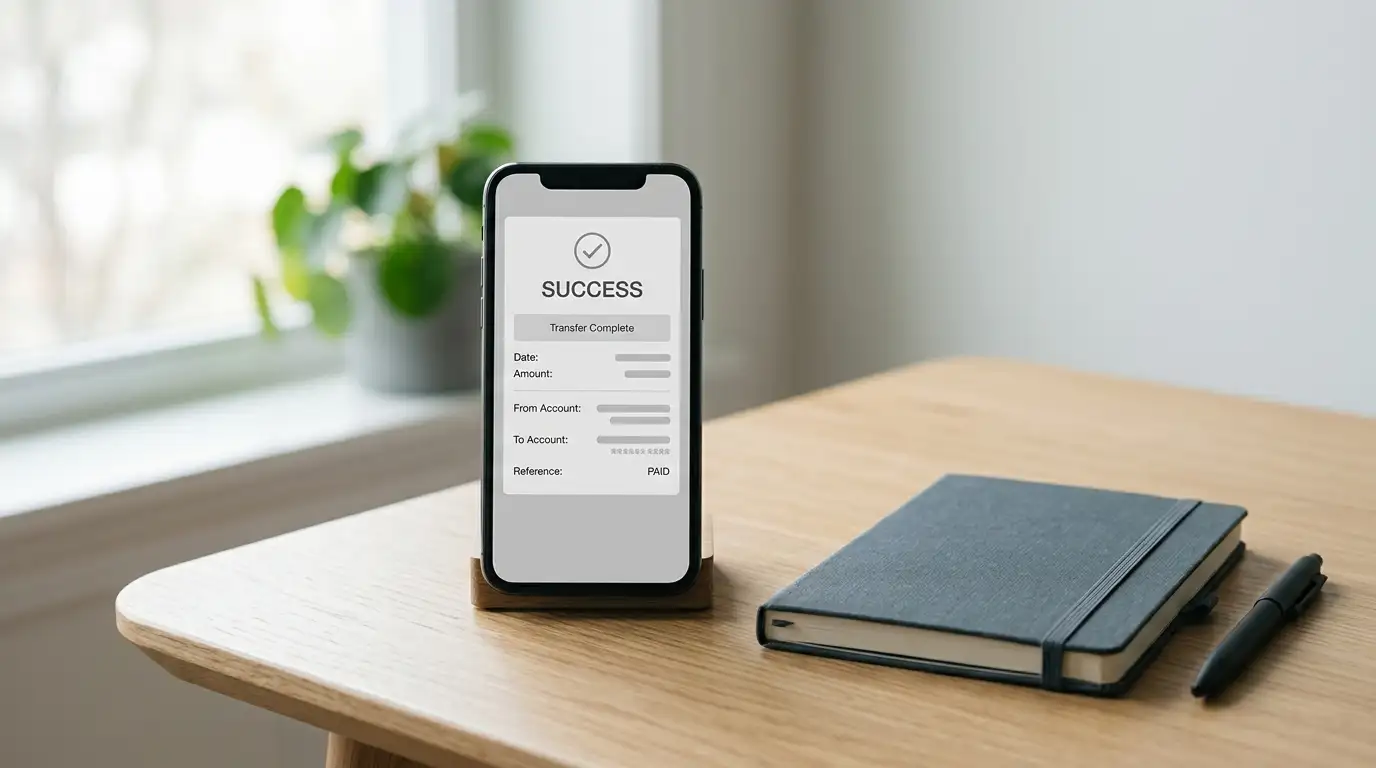
The rails these operators actually pay out on
So you pick a second method at signup, not after you win. This is the part every competing page skips, and it is the part that determines whether depositing by voucher was a good idea.
Ranked by what actually serves an Australian player, PayID and Osko are the clear winners — money to your bank in minutes using a mobile number or email, no card details, no fees. Golden Crown is the only site on this list offering both, and that single fact arguably makes it the best voucher-friendly operator here regardless of its bonus. Ozwin accepts PayID on deposits, and other operators support it inconsistently across mirrors, so confirm in the cashier rather than trusting a review.
Crypto is second and often literally faster — Ozwin clears in about an hour, VegasNow and 7Bit under a day. Fast, yes, but it means acquiring and holding cryptocurrency, which reintroduces the exact bank-account paper trail the voucher existed to avoid, plus exchange spreads and a volatile asset holding your winnings while it settles. And note the wrinkle: the June 2024 legislation bans digital currency as a *deposit* rail for interactive wagering, so treating crypto as a two-way solution here is not the tidy answer it looks like.
E-wallets sit in the middle. eZeeWallet handles one to three days at Ozwin, GoldWin’s e-wallet tier runs the same. Bank transfer is the fallback and behaves like one: three to five days at Ozwin, five to seven business days at GoldWin. Cards work at some sites for payouts, slowly.
Then the ceilings, which matter more than speed for anyone who has a decent night. LevelUp reportedly caps a single withdrawal near A$3,000. GoldWin lands around A$2,000 per transaction and demands a A$100 minimum before it will pay anything at all. 7Bit applies weekly limits. VegasNow publishes daily, weekly and monthly ceilings. A four-thousand-dollar win does not arrive as four thousand dollars; it arrives in slices, on a schedule the operator sets.
The verification you skipped on the way in
Here is the consequence nobody mentions, and it undoes the main selling point.
You deposited anonymously. No document, no selfie, no proof of address — that is the whole appeal, and it is real. But you cannot withdraw anonymously. Every operator on this list runs identity verification before releasing funds, because anti-money-laundering obligations apply to payouts regardless of how the money arrived. So you hand over the driver’s licence, the utility bill, sometimes a selfie holding the document. Whatever privacy the voucher bought lasts precisely until you win.
Say the quiet part: the anonymity is one-directional. It protects a losing player perfectly and a winning player not at all. Which is a strange product to market on privacy, since the outcome that ends the privacy is the outcome you were hoping for. If your reason for using CashtoCode is keeping gambling off a bank statement, it works — deposits stay invisible, and if the money is gone, so is the paper trail. If your reason is remaining unidentified to the operator, the method cannot deliver that and never claimed to in the fine print.
One practical note that saves grief: verify your account early, while your balance is small and nothing is pending. Ozwin’s own player feedback includes a case of a withdrawal rejected because the name on updated identity documents no longer matched the name the account was opened under. Documents that match your account details, submitted before you need them, turn a five-day wait into a five-hour one.
Can you withdraw winnings to CashtoCode?
No. CashtoCode is deposit-only at every casino, and the limitation is structural — a prepaid voucher has no account behind it to receive funds. Pick a withdrawal method when you register: PayID or Osko for minutes, crypto for about an hour, e-wallets for one to three days, bank transfer for up to a week.
Do you still need to verify your identity if you deposit anonymously with a voucher?
Yes. Anti-money-laundering rules apply to payouts no matter how you deposited, so every operator here requests identity documents before releasing winnings. The voucher keeps deposits off your bank statement, but it cannot keep you anonymous to the casino once you ask to be paid.
Where the law leaves you

No Australian-licensed casino takes this voucher — or any other
Worth stating flatly, because the phrasing on most pages implies otherwise: there is no Australian-licensed online casino accepting CashtoCode, and there is no Australian-licensed online casino accepting anything else either. None exists.
The Interactive Gambling Act 2001 prohibits the provision of online casino gaming to Australians. New licences for it are not available and have not been for over two decades. Australia does license interactive gambling — but only wagering and lotteries, under state and territory frameworks. Sportsbet, TAB, Ladbrokes and their peers hold genuine Australian licences, and they offer sport and racing. No pokies, no blackjack, no live tables, and no CashtoCode. So the licensed Australian operator is a real thing that answers a different question than the one you came here with.
Every site on this list is therefore offshore, licensed in Curaçao, Tobique or a comparable jurisdiction. The Act targets operators rather than players — it says nothing about penalties for an Australian adult who signs up to an offshore casino, and none exist. ACMA blocks offshore sites and pursues operators as a matter of routine. That is enforcement aimed over your head.
What it costs you is protection. Play at a Curaçao-licensed site and your recourse in a dispute runs through Curaçao, not through an Australian regulator or ombudsman. That is the actual trade, and it does not change based on how you deposited.
What the June 2024 credit ban changed
The reason a cash voucher matters in this market right now is legislative, and almost nobody on this topic connects the two.
The Interactive Gambling Amendment (Credit and Other Measures) Act 2023 passed Parliament on 6 December 2023 and commenced in full on 11 June 2024. It amended the Interactive Gambling Act 2001 to prohibit credit cards, credit-card-linked accounts and facilities, and digital currency as payment methods for interactive wagering services, and expanded ACMA’s compliance and enforcement powers. The Australian Banking Association put it without qualification: from mid-2024 it is illegal to use credit cards, including via digital wallets and cryptocurrencies, for online gambling in Australia.
Two whole rails, removed. What remains carrying the load is debit, bank transfer, the PayID and Osko instant rails, and prepaid instruments — vouchers like CashtoCode, Neosurf and paysafecard. That is not a coincidence of fashion. It is a payments landscape reshaped by statute, and cash-adjacent methods filled the space the ban created.
The Act carries a statutory review of that prohibition, so the position may develop. As of 2026 it is settled law and thoroughly bedded in. And CashtoCode itself sits entirely outside it — a prepaid payment instrument, not a gambling product, not restricted under the Act. Buy it with cash and you are using the most straightforwardly compliant deposit rail available. Buy it with a credit card and you have simply moved the problem one step upstream.
Is it legal to deposit with CashtoCode at an online casino in Australia?
Using CashtoCode is legal — it is a prepaid payment instrument, not a gambling product. The Interactive Gambling Act 2001 restricts operators, not players, and imposes no penalty on an Australian adult depositing at an offshore casino. The cost is protection: disputes go through the offshore regulator, not an Australian one.
Games you can fund this way
The payment method does not change what is in the lobby. A voucher-funded balance buys the same games as a PayID-funded one, so the library question is entirely about which operator you picked. Still worth two notes, because voucher-sized money behaves differently from bankroll-sized money.
Pokies, which is what most of this money goes on
Pokies absorb the overwhelming majority of voucher deposits, and the operators here split into two camps. Ozwin runs Realtime Gaming exclusively — a tight catalogue in the low hundreds, built on the RTG feel that Australian players either specifically want or specifically avoid. Everyone else aggregates: 7Bit reports up to ten thousand titles from over a hundred providers, Golden Crown beyond ten thousand, GoldWin around 4,200 from 65-plus studios, Rollero ninety-plus studios including BGaming, TrueLab and Peter & Sons.
More is not better past a point. Nobody plays four thousand games. What the aggregation buys you is the specific titles you already like being present, which is a real advantage over a curated lobby if your taste sits with Pragmatic Play or Hacksaw. If it sits with Cash Bandits, the curated lobby wins and the ten-thousand-game count is noise.
Live tables and the wagering problem
Live dealer tables — roulette, blackjack, baccarat, running on Evolution, Ezugi and Pragmatic Live across most of these sites — are available and they are where voucher deposits go wrong.
Do the arithmetic. A A$30 voucher, a matched bonus, and Ricky’s 50x wagering means A$1,500 of turnover to clear it. At Ozwin’s 60x, A$1,800. WinSpirit’s 40x on a A$300 bonus still means A$12,000 through the games. Now add the rule most sites apply: table and live games contribute a fraction of pokie turnover toward wagering, sometimes ten percent, sometimes nothing at all. GoldWin and 7Bit both restrict how bonus money interacts with table play, and 7Bit voids winnings outright if you exceed roughly five dollars a spin while a bonus is live.
So the “free spins” and the generous-sounding match are not gifts, whatever the landing page implies. They are a turnover contract with your name on it, and a small voucher deposit is the worst possible bankroll for honouring one. A casino is not a charity — it is a business with a floor plan optimised for people who lose slowly. If you deposit A$30 to play live blackjack, decline the bonus. Your money stays yours, withdrawable the moment you decide to stop.
What happens if you do not use the full voucher balance?
The code holds its remaining balance and can be used again until spent, at the same merchant or another that accepts CashtoCode. Codes expire once fully redeemed. Keep the email or receipt with the 20-digit code — lose it and you lose the leftover, because there is no account to recover it from.
How this list was put together

Three filters, applied in order.
First, verified acceptance. An operator made the list only where CashtoCode support was confirmed either in the operator’s own published material — Rollero and GoldWin both name it directly — or in Funanga’s own partner directory, which lists accepting merchants and is filterable by payment method, licence and operating entity. Affiliate rankings were used to find candidates, never to confirm them. That distinction removed at least one name that several competing pages still lead with: Fair Go appears on multiple lists as a flagship CashtoCode site with a A$25 to A$400 band, but its current Australian-facing status could not be confirmed against a primary source, so it is not here.
Second, published licensing. Where a licence number exists in accessible material it is quoted and attributed — Ozwin’s 8048/JAZ2020-013, Neospin’s 365/JAZ, GoldWin’s OGL/2024/1756/0979, Rollero’s Tobique 0000064 against Costa Rican company number 3-102-911867. Where no number could be found, the table says so rather than filling the cell with the jurisdiction name and hoping it reads as verification. LevelUp is flagged as contested because three mutually exclusive licensing accounts circulate about it.
Third, a usable exit. Any operator taking a one-way deposit method needs a real withdrawal rail, so payout options and timings were checked and quoted per site. The ranking rewards PayID and Osko above crypto, and crypto above bank transfer, because that is the order in which Australian players actually get their money.
Figures here come from operator cashier pages, Funanga’s own product and partner material, reseller listings, and the Commonwealth legislation register for the statutory dates. Where sources conflicted — the limit bands, LevelUp’s licence, several bonus headlines — the conflict is reported rather than resolved by picking whichever number reads best. Bonus terms and limits change without notice, sometimes weekly. Confirm in the cashier before you buy a voucher, not after.
Keeping it boring on purpose
There is one genuine advantage to a prepaid voucher that has nothing to do with privacy, and it is worth more than the privacy.
A voucher is a hard ceiling. You decide the number at the counter, you hand over that cash, and the account cannot go past it. No card sitting in the cashier for a top-up at one in the morning. No “just one more deposit” when a bank transfer is two clicks away. The friction that makes CashtoCode mildly inconvenient — walking to a shop, buying a code, entering twenty digits — is the same friction that makes it the most self-limiting deposit method available to an Australian player. Used deliberately, that is a feature you cannot buy from PayID at any price.
The other side of the ledger is worth stating with equal directness. Every site on this list is offshore, which means no Australian regulator stands behind your account, no local ombudsman hears your complaint, and the deposit-only structure means your money moves in one direction faster than it moves in the other. Set a figure you are indifferent to losing, buy that voucher, and stop when it is gone.
If the amount stops being indifferent, the pattern has changed and the tools exist: deposit limits and self-exclusion at the operator level, and Australian support services including Gambling Help Online and the National Gambling Helpline on 1800 858 858, free and confidential. Verify your account early, keep the voucher receipt, and treat a losing week as information rather than a debt to be recovered. The house edge does not negotiate, and it never has an off night.
Casino Deposit Methods Australia 2026 — Compared
Content created by the «PokiePay» team