
No ID verification withdrawal casinos in Australia: the threshold nobody prints
 Available in AU
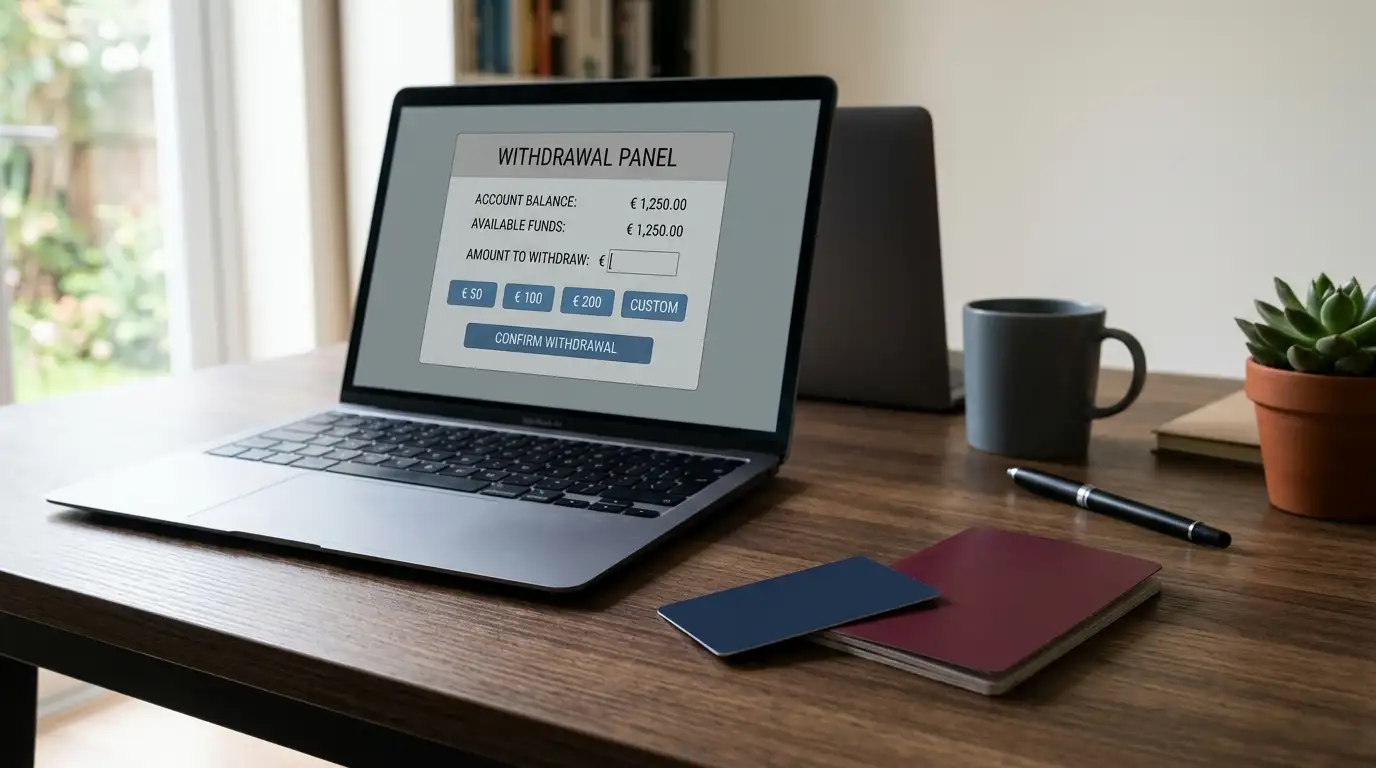
Nobody uploads a driver’s licence for fun. The search that brings most Australians to this topic is not really about privacy in the abstract — it is about a specific fear: that the money sitting in a casino balance will turn into a document request at the exact moment it matters. So the useful question is not “which sites have no verification.” It is narrower and far more practical. Up to what amount, on which payment rail, and what shuts the window?
That framing matters because zero-ID withdrawal is not a permanent property of an operator. It is a window with an edge, measured in Australian dollars, and every site on this page has one. Some keep it wide. Some keep it wide for crypto and narrow for bank transfers. One or two have no window at all and are on this page precisely because they prove the point. The sites below are all offshore, because — as the legal section sets out in detail — no Australian-licensed alternative can exist. Not “does not exist yet.” Cannot.
What “no ID verification withdrawal” actually buys you in Australia
Start with the disappointing part, because everything useful follows from it. At any operator holding a current licence — Curaçao, Tobique, Anjouan, Malta, any of them — identity verification will be triggered eventually. The licensing authority requires customer due diligence as a condition of the licence. An operator that never verifies anybody is not being generous. It is operating outside its own licence terms, which tells you something unpleasant about how it will behave when you ask for A$8,000 back.
What varies enormously is when. That single variable is the whole subject, and it splits the market into three models that behave completely differently at the cashier.
The three verification models, and which one you are actually signing up to
Front-loaded verification asks for documents at signup, before your first deposit clears. It feels like the worst option for about two hours. Then it becomes the best one, because every withdrawal after that runs through a verified account and clears in minutes. Deferred verification — the model most sites marketed as “no verification” actually run — lets you register on an email address, deposit, play, and pull small amounts without ever showing a document. The check waits. And the third model, the genuine never-ask-anybody kind, exists mostly at sites with no meaningful licence, which is a different problem wearing the same costume.
| Verification model | Documents needed | When it triggers | Cash-out speed | What it costs you |
|---|---|---|---|---|
| Front-loaded | ID, proof of address, payment proof — all at signup | Before your first deposit | 9 min to 2.5 hours on PayID once cleared | Two hours of admin on day one, then nothing |
| Deferred (soft) | Same set, later | First withdrawal, or A$1,000–A$2,000 cumulative, or a risk flag | Fast under the threshold, 1–5 days once tripped | The delay lands on your largest win |
| No checks at all | None claimed | Claimed never | Fast right up until it is not | No licence obligation to pay you, and no regulator to tell |
Read that third row twice. A site with nothing to lose has nothing to lose by keeping your balance.
How much can I withdraw from a casino without ID verification in Australia?
Roughly A$1,000 to A$2,000 in cumulative withdrawals at the more permissive offshore operators, sometimes a little more on crypto. Below that band, deferred-verification sites usually pay without asking for documents. Above it, the check fires. The exact figure is set by the operator and is rarely published, so treat the band as a working estimate, not a guarantee.
The three triggers: the first cashout, the running total, the risk flag
Most guides talk about “the threshold” as though it were one number. There are three separate triggers, and they fire independently.
The first is the withdrawal request itself. At a large share of deferred-KYC sites, requesting any payout — A$50 included — starts the verification process. The amount is irrelevant; the act of taking money out is the event. That is worth knowing before you test a site with a small cashout and conclude the window is open.
The second is a running total. Cumulative deposits or cumulative withdrawals crossing a set figure locks the account until documents arrive. This one can fire while you are still playing, with no withdrawal requested at all. If your balance has been climbing nicely, an account lock at that moment feels a lot like the site is sitting on your money, because functionally it is.
The third is the one the operator cannot bargain away. Anti-money-laundering reporting thresholds and internal risk flags — an unusual deposit pattern, a new device, a changed IP, a random compliance sample — trigger identification regardless of what the marketing page says. Here the operator has no discretion. The legal obligation outranks the promise.
Re-verification is a fourth event that catches people out later. Cumulative activity in the A$5,000 to A$25,000 range commonly triggers a fresh round, and this time a proof of address dated within 30 days rather than the 90-day document that passed at signup. Past roughly A$25,000 lifetime, source-of-funds evidence enters the conversation: bank statements showing where the money that funded your deposits came from. Payroll, savings, a property sale. Something documentary.
What documents will a casino ask for, and when do they ask?
Three items, consistently: a government photo ID (passport, or both sides of a full-photo driver’s licence), a proof of address under 90 days old (bank statement, utility bill, ATO letter, council rates notice), and payment-method proof. A selfie holding the ID is common. Medicare cards get refused — no photo. Crypto depositors usually skip the payment-proof step.
Why withdrawal caps guarantee the threshold fires on a big win
Here is the connection almost nobody draws, and it is arithmetic rather than opinion. Every operator on this page runs daily, weekly and monthly withdrawal ceilings. King Billy caps at A$4,000 a day and A$15,000 a week. SkyCrown runs A$5,000 daily, A$10,000 weekly, A$15,000 monthly. Wazamba is the most generous at A$7,500 daily and A$30,000 monthly.
Now win A$12,000. At King Billy that is three separate payouts across three days minimum. At SkyCrown, three as well. Each tranche adds to your cumulative total, and the cumulative total is trigger number two. So a large win does not merely risk hitting the verification threshold — it walks into it by structural necessity, because the caps force the win to be paid in pieces and the pieces add up. There is no version of collecting A$12,000 from a A$4,000-a-day cap that stays under a A$2,000 cumulative threshold.
Which reframes the whole exercise. The no-ID window is real, and it is sized for modest cash-outs. Anyone planning around a big score is not choosing between verifying and not verifying. They are choosing between verifying on a quiet Tuesday and verifying with five figures frozen.

Where it works: sites accepting Australians with the widest no-ID window
Ten sites, ordered by how much room they actually leave before documents are demanded — not by the size of the welcome offer, which is what most rankings on this topic quietly sort by. Two of them are here as counter-examples, and they are at the bottom for that reason.
One thing to check before the table. Two pairs on this list are less independent than they look. SkyCrown and Lucky7even are both operated by Metlait SRL. VegasNow and Just Casino both publish the same Curaçao licence number, OGL/2024/164/0246. If your plan was to spread activity across several unrelated brands so that no single one accumulates a threshold-triggering total, that plan is thinner than the ten front ends suggest. Shared operator, shared compliance department, shared view of your account history.
| Site | Licence | Verification model | Withdrawal caps | Fastest rail | Min deposit |
|---|---|---|---|---|---|
| 7Bit Casino | Curaçao OGL/2024/1307/0748 | Deferred, crypto window widest | A$20 minimum out, no published ceiling | Crypto, hours | A$20 |
| Wazamba | Curaçao/Anjouan, number not published in AU material | Deferred, 24–48 h review once triggered | A$7,500 daily, A$30,000 monthly | Crypto and e-wallet | A$15 |
| NeoSpin | Curaçao | Front-loaded, crypto clears under threshold | Not published for AU | PayID 22 min average | A$30 |
| Wild Tokyo | Curaçao | Deferred, fires on withdrawal | Not published for AU | PayID, 2 h 34 min measured | A$20 |
| King Billy | MGA plus Curaçao OGL/2023/174/0082 | Deferred | A$4,000 daily, A$15,000 weekly | Crypto via CoinsPaid | €20 |
| Lucky7even | Tobique primary, Anjouan for Canada | Deferred, 72 h processing | ~A$3,200 daily equivalent | Crypto | A$30 |
| Crownslots | Curaçao eGaming | Hard 72-hour verification deadline | A$2,500 card maximum out | Crypto | A$30 |
| VegasNow | Curaçao OGL/2024/164/0246 | Front-loaded, pre-approved queue | A$30,000 monthly | PayID 12 min average | A$20 |
| SkyCrown | Tobique 0000064 | Front-loaded at signup | A$5,000 daily, A$15,000 monthly | PayID, 2 h 29 min measured | A$30 |
| Just Casino | Curaçao OGL/2024/164/0246 | Deferred, source-of-funds at volume | Not published | Crypto only | Crypto only |
7Bit Casino — the deepest crypto window on the list
Running since 2014, which in offshore terms is geological. 7Bit sits under Scores55 Tech B.V. (formerly Dama N.V.), the Curaçao group that also runs BitStarz, Playamo, KatsuBet and Winz.io, on licence OGL/2024/1307/0748 and the SoftSwiss platform. Six coins — BTC, ETH, LTC, BNB, DOGE, BCH — with a A$20 minimum in and a A$20 minimum out, and crypto payouts processed in hours. A decade of continuous operation without accumulating the complaint record that usually trails a brand around is the single most useful fact here, and it is worth more than any bonus figure.
The crypto rail is the reason this one leads. Twenty Australian dollars equivalent, in and out, processed same-day, with the lightest document friction on the list at small amounts. The fiat side tells a different story: cards and e-wallets run one to three business days, bank transfers up to five, and the public complaint record shows processing delays past the advertised windows plus held Neosurf deposits. So treat 7Bit as a crypto site that happens to accept cards. The welcome package spans four deposits to A$10,800 or 5 BTC at 35x on the first three tiers, rising to 45x on the fourth — and only fiat deposits activate it, so a crypto-first player gets the good rail and none of the “free” money. Which is fine. Bonus funds at 45x wagering are less a gift than a lease.
Wazamba — lowest entry, highest ceiling
Fifteen Australian dollars, in and out. That is the lowest entry point on this list and it is paired with the most generous ceiling — A$7,500 a day and A$30,000 a month — which is an unusual combination and makes Wazamba the widest window here in pure AUD terms. Verification is deferred, and when it does fire the review runs 24 to 48 hours from the moment a complete document set lands. Deposits and withdrawals can both be blocked while it runs, so the review is not a background process you can play through. The jungle-themed lobby carries 5,000-plus titles across pokies, table games and live dealer, with Gold Blitz and Super Cash Boost among the named AU-facing pokies, and demo mode on much of the library.
One structural detail deserves more attention than it gets. Casino and sportsbook run on a single account and one shared balance — AFL, NRL, cricket, rugby, three racing codes, live in-play markets, all funded from the same wallet as the pokies. Convenient, and quietly consequential for thresholds: combined activity accumulates against one cumulative trigger rather than two separate ones. A punter who splits time between Saturday footy markets and the reels will reach the verification point faster than either habit alone would suggest. The gap worth flagging honestly: the operating entity and licence number are not stated in Wazamba’s Australian-facing material. Both need reading off the footer and legal pages before depositing, and a site that makes you hunt for its licence number has already told you something about its disclosure instincts.
NeoSpin — crypto under the line, PayID over it
Curaçao-licensed, built around modern payment rails rather than having them bolted on afterwards, and the practical draw is running USDT and PayID on the same balance. Crypto under the operator’s review threshold clears without documents; PayID above it does not. Minimum deposit A$30. One AU review desk measured a 22-minute PayID average for verified accounts with a fastest recorded payout of 11 minutes, and no pre-approved queue — so every withdrawal joins the normal processing line rather than skipping it.
The headline welcome pool is the largest on the Australian-facing market at A$10,000 plus 100 free spins, and it deserves the arithmetic rather than the applause. The pool spreads across multiple deposits; the first is a 100% match up to A$1,500 with 100 spins, at 40x. Clearing an A$1,500 bonus at 40x means A$60,000 of qualifying play before the balance converts to something you can withdraw. Two caveats to close on. The operating entity is not consistently disclosed across public sources, which is a gap rather than a red flag but a gap all the same. And independent reviewers keep making the same point about this site: inbound speed does not predict outbound speed. PayID deposits land in seconds. Confirm in the cashier which rails actually pay out, and how fast, before funding anything.
Wild Tokyo — clean at A$150, sticky above it
Curaçao-licensed, SoftSwiss underneath, with a verification flow that fires on withdrawal rather than at signup. What makes Wild Tokyo unusually informative is that it has been tested with the clock running. A July 2026 test from a Melbourne IP recorded signup at 2 minutes 26 seconds, an A$220 PayID deposit landing in 53 seconds, driver’s licence and utility bill clearing in 5 hours 22 minutes, and an A$150 PayID withdrawal approved in 51 minutes and credited 2 hours 34 minutes after the request — with no document request beyond the standard set. Support is the fastest measured on this list: live chat first response averaging 2 minutes 41 seconds across four separate contacts, Telegram inside five minutes, email around 2 hours 18 minutes on business days.
Then there is the other half of the record, and it is the reason this site sits mid-table rather than top. Independent aggregators show withdrawal-delay complaints above the shortlist median, concentrated on larger single cash-outs where discretionary document requests stall payouts by days. The pattern is consistent: clean at A$150, sticky as the number grows. One review desk scored payouts 7 out of 10 against 10 out of 10 for both cashback and support, which is a fair summary of the trade. The five-tier loyalty programme tops out at 20% weekly cashback at 30x on the refunded amount, the best ceiling on this list, though reaching tier five takes two to three months of consistent mid-stakes play. Wild Tokyo is the operator that demonstrates the threshold window narrowing as the amount climbs, which makes it useful reading even for someone who never registers there.

King Billy — the only dual licence here
Launched 2017, medieval-kingdom theme, and structurally the most interesting entry on the list. Dama N.V. operates the Curaçao entity under OGL/2023/174/0082 while Kings Media Ltd / N1 Interactive Ltd holds a Malta licence. An Australian plays under the Curaçao side. But the MGA licence still matters, because it comes with independent dispute resolution, segregated player funds and mandatory responsible-gambling tooling — and an operator that has kept a Malta licence in good standing for years is a different proposition from one holding only the cheapest paper it could find. Nearly a decade of operation in a market where brands routinely fold inside two years is the other trust signal.
The library is the largest by provider count: 5,000-plus games from 88 studios including NetEnt, Pragmatic Play, Play’n GO, Playtech, Games Global, Nolimit City, Red Tiger, Big Time Gaming, Quickspin, Yggdrasil, Push Gaming, Betsoft and BGaming, with 85-plus crash titles, 180-plus jackpots and Mega Moolah on the progressive networks. Six coins through CoinsPaid, and balances can be denominated in mBTC. Wagering on the welcome package is 30x bonus-only, genuinely below the 35–40x norm; the no-deposit offer is a punishing 50x, so the two numbers are not the same animal. The catch is the one that matters most for this topic: A$4,000 daily and A$15,000 weekly caps are the tightest ceilings here, which means the tranching problem bites hardest at King Billy. A serious win gets paid out over the better part of a week, and every instalment feeds the cumulative total.
Lucky7even — same operator as the fastest site here
Launched in 2024 and operated by Metlait SRL, which is also the operator behind SkyCrown. Worth knowing if you were treating the two as independent. The licensing arrangement is the genuinely instructive part: Lucky7even runs dual licences, Tobique as the primary and Anjouan for Canada, and Australia appears on the Anjouan restricted list while being accepted under Tobique. Same brand, same site, and eligibility depends entirely on which licence covers you — verified from the operator’s own information sheet rather than from a marketing page. That is what “check the licence, not the promise” looks like in practice, and it is not generic advice.
Eighty-plus providers including Evolution, Pragmatic Play, Hacksaw, Nolimit City, Play’n GO and Push Gaming; ten cryptocurrencies from BTC through TRX; A$30 minimum deposit; withdrawals within 72 hours against a daily maximum around A$3,200 equivalent. PayID is confirmed for both deposits and withdrawals on the official Australian page — but is absent from the operator’s own information sheet, a live discrepancy that is unresolved at the time of writing and means PayID withdrawal timings here have not been independently clocked. Reload bonuses carry 50x wagering, steeper than the market. One naming trap to avoid: “Lucky7 Casino” is a different Metlait SRL brand with no PayID at all, A$3,000 daily and A$30,000 monthly caps, and 72-hour processing after approval. Two similar names, one operator, different cashiers.
Crownslots — a published clock instead of a vague threshold
The newest brand here, Curaçao eGaming-licensed per Australian review sources, and it does something the rest of the list does not: it publishes the deadline. Account verification is required within 72 hours. Not “at a threshold,” not “when flagged” — 72 hours, stated. For a reader trying to plan around document requests, a hard clock is more useful than a soft threshold, because you can work with a number you can see. The lobby runs 8,000-plus games with RTP displayed in-lobby between 94% and 97.5%, live tables from Evolution, Pragmatic, Ezugi and Asia Gaming spanning A$1 to A$5,000 on blackjack, A$0.50 to A$10,000 on roulette and A$1 to A$15,000 on baccarat. There are native iOS and Android apps, which is unusual — browser-only is the norm across this list.
Welcome terms run 400% up to A$6,000 with 400 free spins across four deposits at 35x, again under the 40x standard, and bonus conditions sit on the promotions page rather than three clicks deep in the fine print. Cards take a A$30 minimum in, a A$50 minimum out and cap at A$2,500 per withdrawal against 3–5 day processing, so cards are the slow lane here as everywhere. The honest counterweight is the thing that makes “new” a warning rather than a selling point: no long payout history exists to check. Transparent terms and displayed RTPs are good signals about intent. They are not evidence of behaviour under pressure, which only accumulates over years. The operating entity is also not disclosed in the Australian-facing material examined.
VegasNow — front-loaded, and sharing a licence
Launched 2024, retro-Vegas presentation, and the largest catalogue on this list at 14,000-plus games from 100-plus providers including Evolution, Playtech, NetEnt, Hacksaw, Playson, BGaming, Swintt, Yggdrasil, Relax Gaming, Betsoft and Tom Horn. Average RTP across the library sits near 96%, with blackjack around 99.5% and pokies around 96.5%. A$20 minimum deposit, A$20 minimum withdrawal, A$30,000 monthly maximum. Crypto pays in 24 hours, cards in one to three days, bank transfer three to five.
Ownership is reported two ways and this page is not going to pretend otherwise. The operator’s own Australian-facing site names Just Entertainment B.V., Curaçao company registration 160603, at Scharlooweg 39 in Willemstad. One Australian review desk lists Dama N.V., “previously Just Entertainment B.V.” Both cannot be current; the discrepancy is recorded rather than smoothed over. What is not in dispute is the licence number, OGL/2024/164/0246 — the same number Just Casino publishes, which is how you discover that two apparently separate options on this list share a regulatory identity. On the mechanics, VegasNow makes the same bet SkyCrown does: front-load verification, then run a pre-approved queue for verified accounts. Measured PayID average is 12 minutes with a fastest recorded payout of 6 minutes, and KYC clearance runs one to six hours. Recurring criticisms are a thin set of withdrawal options and no dedicated app.
SkyCrown — the site that wins by verifying you first
The uncomfortable entry on a page about avoiding ID checks: SkyCrown asks for documents early, at signup or just after the first deposit, and it has the fastest measured fiat payouts of anything Australian-facing. Launched 2022, operated by Metlait SRL under Tobique licence 0000064, with native AUD accounts, A$30 in and A$30 out, and caps at A$5,000 daily, A$10,000 weekly, A$15,000 monthly. The official game count is 7,000-plus; some Australian review sites cite up to 10,400, and the discrepancy is the operator’s to explain. Fifty-plus providers, PayID alongside cards, Neosurf, Apple Pay, paysafecard, Skrill, Neteller, MiFinity, Jeton, MuchBetter, Flexepin, plus BTC, ETH, LTC, USDT and DOGE.
The numbers that matter: KYC clears in one to four hours, there is a pre-approved withdrawal queue under A$2,000, and one independently timed A$180 PayID withdrawal landed in a bank account 2 hours 29 minutes after the request — against an advertised average nearer ten minutes, which is a gap worth knowing but still leaves SkyCrown ahead of every deferred-verification site on this page for anything above pocket money. Two practical warnings. The 100 free spins offered without a deposit are gated on phone verification, so the “no verification” claim breaks before a cent moves — a neat illustration of how elastic that phrase is in casino marketing. And the live domain is skycrown.com; the older skycrown1.com mirror no longer reliably resolves and is the single most common reason Australians conclude the site is down when it is not. Bookmark the real one, not a clone.
Just Casino — crypto-only, and the slowest here
Running since 2022, operated by Just Entertainment B.V., under Curaçao Gaming Authority licence OGL/2024/164/0246 — a number you can look up on the CGA’s public register, which is more than several sites on this list can offer, and which is also VegasNow’s number. Banking is BTC, ETH, LTC, DOGE and XRP and nothing else. No fiat option, no AUD balance. Three thousand-plus games from Pragmatic Play, Evolution, NetEnt, Play’n GO, Playtech, Red Tiger, Big Time Gaming, Relax Gaming and Yggdrasil, averaging around 96% RTP, with a sportsbook attached.
On paper this reads as the maximally low-friction option on the page. Crypto-only, no bank account touching anything, no AUD trail. In practice it is the slowest, and that is precisely why it is here. Non-VIP processing runs two to four hours against minutes at the top loyalty tier, source-of-funds documentation appears at higher withdrawal volumes, and unresolved verification requirements are the most common complaint theme in its player communities. Crypto-only banking removes the bank from the picture; it does not remove the compliance department. Deposit limits, self-exclusion on request, account closure and a reality-check timer are all available — conditions attached to the Curaçao licence, not protections Australian law provides. Which matters for the next part: if this account goes wrong, ACMA, the state gambling commissions and AFCA are all out of scope. The escalation path runs through the operator’s own complaints process, then the CGA’s, then independent dispute services. That is the entire ladder.
Can a casino refuse to pay me if I do not complete verification?
Yes, and its terms almost certainly permit it. Every licensed operator reserves the right to require documents before releasing funds, which means “no verification” marketing was aspirational rather than contractual. Refuse or fail the check and the withdrawal stays frozen indefinitely. Disputes on this exact point are the hardest category to win at independent resolution services.

How the checks get triggered mid-cashout, and how to not be there
This is the scenario the whole page exists to help you avoid, and it is worth walking through slowly, because the mechanics are not intuitive until you have seen them.
You have been playing at a deferred-verification site for a few weeks. Small withdrawals have gone through without a murmur. Then a session goes properly well and you request A$4,000. Within half an hour, an email asks for a photo of your driver’s licence, a selfie holding it, and a utility bill dated inside the last three months.
Notice where the money is. Not in your bank account. Not, functionally, in your control. It is in the operator’s system, pending the outcome of a review that runs one to five business days depending on staffing and the day of the week. Documents uploaded on a Saturday evening frequently sit until Monday morning offshore time. You are now submitting paperwork to a company that is holding four thousand of your dollars, which is a materially different negotiating position from submitting the same paperwork on a quiet weekday with a zero balance.
If the review goes cleanly, you wait and you get paid. If the operator wants a second document, questions the source of funds, or applies enhanced due diligence, the wait extends. And this is the asymmetry worth internalising: the players most attracted to no-verification sites are the ones who most need a formally verified account when a dispute starts. Independent resolution services work from documented account history. An account that was never verified is one the operator can raise legitimacy questions about — questions a verified account simply does not generate.
What happens if verification is triggered while my withdrawal is pending?
The withdrawal freezes and your funds stay in the operator’s system, not your account, until documents are reviewed — commonly one to five business days. Extra document requests or source-of-funds queries extend it further. Submitting all documents at once, escalating by email rather than live chat to create a paper trail, is the fastest route out.
Six reasons documents get knocked back
Rejections are usually mundane and entirely avoidable. Name mismatch is the most common: you registered as John Smith, the passport says John Alexander Smith, and the automated check fails. Address mismatch comes second — a bank statement showing the flat you moved out of last year. Image quality is third: photographed at an angle, glare across the details, corners cropped. A document scanning app fixes that in thirty seconds by correcting perspective automatically.
Then the three that need more than a re-upload. An expired licence is refused even if the renewal is in the post; use the passport instead. An automated face match against an eight-year-old ID photo can fail after a beard, glasses or weight change — that one needs escalating to human review, which usually resolves within a day. And depositing from a bank account that is not in your name is close to unfixable: no licensed operator will pay winnings to an account whose name does not match the verified identity, and no amount of explaining changes that.
How long does casino verification take in Australia?
One to eight hours when all documents are uploaded in a single session during operator business hours, with some approvals inside thirty minutes. Wild Tokyo cleared a licence and utility bill in 5 hours 22 minutes under test. Documents requested at first withdrawal instead take 24 to 72 hours — the same work, three times the wait.
The pending window is a separate delay, and it is the one nobody warns you about
Verification is not the only thing standing between an approved withdrawal and money in your account. Most operators run a pending period — a window, from nothing up to 24 hours, during which the withdrawal can be reversed by the player and the funds returned to the balance. Fully verified, fully approved, and still cancellable.
That window is not an accident of processing. It exists because a meaningful share of pending withdrawals get reversed by players who wander back to the lobby, and the casino designs around that behaviour with some care. Reputable sites offer a lock-withdrawal or instant-process option that skips the window. The worst make it mandatory and unskippable, which tells you exactly what it is for.
So when comparing two sites, check both clocks. Nine-minute PayID processing behind a compulsory 24-hour pending period is slower than 20-minute processing with an instant-lock option, and the first site will advertise the nine minutes.
The practical conclusion from all of this cuts against the premise of the search that brought you here, and it deserves stating plainly rather than buried. Front-loading documents at signup costs one to eight hours, once, on a day when nothing is at stake. Deferring them costs 24 to 72 hours of review plus processing, on the withdrawal you care about most, with the balance in someone else’s system. Same paperwork. Same three files. Wildly different day.

Which rails keep the window open, and which only look like they do
Payment method is where most of the confusion on this topic lives, because deposit friction and withdrawal friction are two different things and the marketing deliberately blurs them. A method can be beautifully anonymous going in and completely useless coming out.
| Method | Deposit speed | Withdrawal speed | Reduces verification? | The AU catch |
|---|---|---|---|---|
| Crypto (USDT TRC-20, BTC) | Instant | Hours, sub-2 h for small amounts | Yes, under the operator’s review threshold | Exchange-side identification applies before the casino sees it |
| PayID | Seconds | 9 min to 2.5 h, verified accounts only | No | Unverified PayID joins the same document queue |
| Neosurf | Instant, cash-bought voucher | Cannot withdraw | Deposit only | You still need a separate verified payout rail |
| MiFinity, Jeton | Minutes | 1–6 hours to 3 days | No | Buffers your bank, not your identity |
| Cards | Instant | 3–5 business days | No | AU banks block or flag gambling-coded transactions inconsistently |
| Bank transfer | Hours | 1–3 days, up to 10 at some sites | No | First large amount often triggers enhanced due diligence |
| POLi | Deprecated since 2024 | Not available | No | Most major AU banks dropped support |
Crypto: the only rail that genuinely widens the window
Under an operator’s manual-review threshold, crypto withdrawals clear faster and with less document friction than any fiat method, and the review thresholds for crypto are typically set higher than for PayID. USDT on TRC-20 is the practical default for Australians: stable value, so a three-day withdrawal window does not become a currency bet, low network fees, and support at most sites on this page. That is a real advantage and it is the honest core of the crypto pitch.
The bounded part comes next, and it has changed recently enough that most guides have not caught up.
PayID: fast, local, and no help at all with documents
PayID is the fastest fiat rail at Australian-facing casinos and it does nothing whatsoever for verification. Both halves of that sentence matter. At front-loaded sites, PayID payouts run from around nine minutes to a couple of hours, which beats every other fiat option comfortably. But the speed is entirely conditional on the account already being verified. Request a PayID withdrawal from an unverified account and it enters exactly the same document review as a bank transfer would — the rail is quick, the queue in front of it is not.
Which makes “PayID casino with no verification” a slightly incoherent search. The two properties are unrelated. PayID is a settlement mechanism operating on the New Payments Platform; verification is a compliance process sitting upstream of it. Choosing PayID for privacy reasons also runs the wrong way: it links a casino payout directly to your bank identity, which is the opposite of anonymous.
Does PayID let me withdraw without verification?
No. PayID is a fast settlement rail, not a verification bypass — its 9-minute-to-2-hour speed only applies to accounts that are already verified. An unverified PayID request enters the same document queue as any other method. PayID also links payouts directly to your bank identity, making it the least private option available.
Neosurf: anonymous going in, useless coming out
Neosurf is a prepaid voucher bought with cash at Australian newsagents and convenience stores, in denominations from A$10 to A$500. No link between your bank account and the casino, instant, and accepted almost everywhere on this list. For deposit privacy it is genuinely the best tool available to an Australian player.
You cannot withdraw to it. Neosurf is deposit-only, full stop. Every player who funds an account with cash-bought vouchers still needs a verified withdrawal method — PayID, bank transfer or crypto — before a single dollar of winnings can move. Plan the exit before you plan the entry, because a balance built entirely on anonymous vouchers still has to leave through a rail that knows who you are.
Cards, bank transfer and the rails that do nothing for you
Visa and Mastercard withdrawals take three to five business days regardless of verification status, and most major Australian banks now block or flag gambling-coded international transactions with irritating inconsistency. Bank transfer runs one to three days and frequently triggers enhanced due diligence on a first large amount, which is the opposite of what anyone reading this page wants. MiFinity and Jeton are worth knowing about for a narrow reason: they buffer your bank from the casino, useful when Commonwealth, Westpac, ANZ or NAB decides to be difficult about a transaction. They do not reduce verification requirements by one document. POLi is gone — deprecated since 2024, unsupported by most major banks.
The crypto anonymity claim, priced honestly for 2026
Here is the part of this topic where nearly every competing guide is running on out-of-date information, and it changes the practical answer rather than just adding nuance.
Do crypto casinos really let you withdraw with no KYC?
At the casino, often yes — under the operator’s review threshold, crypto clears with the lightest document friction available. At the edges of the chain, no. Since 1 July 2026 every transfer processed by an Australian-regulated exchange must carry counterparty identification, with no minimum amount. The anonymity sits in the middle, not at either end.
What the 1 July 2026 travel rule changed
AUSTRAC now enforces the FATF travel rule on Australian-regulated digital currency exchanges. The detail that matters is the threshold: there isn’t one. Every transfer, at any size, must carry the counterparty’s name and the platform involved. A ten-dollar transfer is covered identically to a hundred-thousand-dollar one. That places Australia alongside France, the Netherlands and Japan on universal application, against jurisdictions like the United States where the obligation starts at USD 3,000.
Transfers to unhosted wallets — a hardware wallet, a self-custody address — add a further step: the sender must confirm and declare that the destination address belongs to them. Kraken and CoinJar implemented ahead of the deadline. The legislative basis passed Parliament in 2024, so this was neither sudden nor contested; it simply arrived while the affiliate pages on this topic were still describing 2024 conditions.
Where the anonymity actually sits in the chain
Trace the money and the picture resolves. Australian dollars leave your bank for an exchange that identified you at registration. Crypto leaves the exchange for the casino, and since July that transfer carries counterparty data. The casino may well pay you out with no documents. The crypto then goes back to an exchange to become Australian dollars again — identified once more, and reported.
So the friction reduction is real and it lives in the middle of the chain, between the exchange and the casino. It does not exist at the two points where Australian dollars are involved. Anyone whose actual goal is a payout with no documents and a fast settlement is well served by crypto. Anyone whose goal is for no institution anywhere to know they gambled has bought the wrong product, and has been sold it by pages that stopped updating two years ago.
Worth adding: digital currency is separately banned as a payment method for regulated Australian interactive wagering services under the Interactive Gambling Amendment (Credit and Other Measures) Act 2023. That ban binds the licensed Australian wagering sector, not offshore casinos — but it tells you which direction the regulatory wind blows.
The legal picture: why no Australian site can offer this
Every guide on this subject recites the Interactive Gambling Act 2001 and stops. That is half the story, and it is the less interesting half.
Is a no verification withdrawal casino legal for Australian players?
Playing at one is not an offence. The Interactive Gambling Act 2001 binds operators who supply interactive gambling services to Australians, not the players who use them — there is no provision criminalising an Australian for playing at any offshore casino. The trade-off is that no Australian regulator will help you if the site refuses to pay.
The 29 September 2024 rule that made a domestic no-ID casino impossible
Two separate legal facts stack here, and together they close the door completely.
First, the Interactive Gambling Act 2001 prohibits providing online casino services — pokies, table games, live dealer — to people in Australia. There is consequently no Australian online casino licence to hold. Not a licence that is hard to get. A licence category that does not exist.
Second, and this is the fact missing from essentially every page competing on this topic: AUSTRAC removed the delayed-verification allowance. Chapter 82 of the AML/CTF Rules used to let gambling providers verify a customer within up to 72 hours after opening the account. It was repealed, and from 29 September 2024 the default position under section 32 of the AML/CTF Act applies. Every online gambling service provider under Australian law must now complete applicable customer identification procedures before creating the account or providing any designated service. An interim window ran from 29 September 2023 to 28 September 2024 to let systems catch up. That window closed.
So an Australian-licensed no-verification casino is doubly impossible. The licence category is absent, and for the licence categories that do exist — online wagering — pre-account identification is now mandatory. Sportsbet, Ladbrokes, TAB and everyone else on the ACMA register are the exact operators bound by that rule. They could not offer zero-verification play if they wanted to.
The reform programme has continued since. The AML/CTF Amendment Act 2024 passed Parliament on 29 November 2024, with the Amendment, Class Exemption and Transitional Rules taking effect 31 March 2026 — amended reporting-group rules, adjusted KYC and compliance timeframes, updated exemptions — and Tranche 2 entities following from 1 July 2026. The direction of travel has been consistent for three years, and it is not toward lighter identification.
What ACMA blocking means for a site you are about to deposit at
ACMA enforces the Act partly by asking Australian internet providers to block sites operating in breach of it. As at 20 August 2026, 1,788 illegal gambling and affiliate websites had been blocked since the first request in November 2019, and more than 230 illegal services have withdrawn from the Australian market since enforcement began in 2017.
Note “and affiliate.” Marketing sites are now blocked alongside operators, which has a practical consequence for anyone chasing links: mirrors and clone domains proliferate. SkyCrown’s dead skycrown1.com mirror is the mundane version of this problem. The dangerous version is a lookalike domain that is not the operator at all. Verify the licence number on the issuing authority’s own register — the Curaçao Gaming Authority publishes its licensees, which is how OGL/2024/164/0246 can be confirmed rather than trusted — and reach sites through their canonical domain.
Blocking has not eliminated the grey market. Independent estimates put offshore activity near 15% of total Australian gambling despite the blocklist passing 1,700 sites during 2026, and the 2026 reform discussion includes payment-blocking powers and advertising restrictions. Demand has proven considerably more durable than supply-side enforcement.
Who you complain to when there is no Australian regulator
This is the cost of the whole arrangement, and it is the part worth thinking about before depositing rather than after.
ACMA does not resolve player disputes. Neither do the state gambling commissions, and AFCA has no jurisdiction over an offshore casino. BetStop, the national self-exclusion register, covers Australian-licensed operators — it has no reach whatsoever over the sites on this page, so a player who has self-excluded domestically is not protected here and must contact each offshore site individually.
What remains is a three-rung ladder. The operator’s own complaints process first. Then the licensing authority — the Curaçao Gaming Authority runs a dispute process for players who have exhausted the operator’s channel, and how well it works depends heavily on the complaint and on whether the operator engages. Then independent resolution services, which have no enforcement power and work by reputational pressure plus documented account history. That history is the recurring theme: the less formally established your account, the weaker your position on every rung.
How this list was built
Ranking on welcome bonus size would have been faster and it is what most pages on this subject quietly do. It also answers a question nobody asked. A 450% match is irrelevant to a reader who wants to know whether A$3,000 comes out without a passport.
So the ordering axis is verification friction and threshold width: when documents are demanded, how much room exists before that happens, how fast the review runs once triggered, and whether crypto clears under the threshold without a manual look. Sites where the window is genuinely wide in Australian dollars rank above sites where it is nominally open but narrow. Two operators — SkyCrown and Just Casino — are included specifically because they complicate the premise: one is fast because it verifies you immediately, the other is slow despite asking for nothing upfront. Leaving them out would have made the page tidier and less true.
Every figure here comes from operator terms, public licence registers, or timed tests published by review desks that state their methodology and test dates. Where a number could not be confirmed — Wazamba’s licence number, NeoSpin’s and Crownslots’ operating entities, the true ownership behind VegasNow — that is said rather than filled in with something plausible. Where two sources disagree, both are given. Withdrawal caps described as “affiliate testing figures, not confirmed on official terms” are labelled that way for a reason.
New brands get a specific caveat rather than a bonus point. Crownslots publishes clear terms and displays RTPs in-lobby, which is more transparency than several older sites manage, and it still has no multi-year payout record for anyone to examine. Recency correlates with unproven behaviour under pressure, and pressure is exactly the condition this page is about. A site can only demonstrate how it handles a disputed five-figure withdrawal by handling several, over years, in public.

No-deposit bonuses at sites that say no verification
The overlap between “no verification” and “no deposit bonus” searches is large, and the answer is less satisfying than the search volume suggests.
Can I claim a no deposit bonus without any verification?
Rarely. Most no-deposit offers require email confirmation at minimum and phone verification frequently — SkyCrown’s 100 free spins unlock only after you verify a mobile number. Winnings then face wagering requirements and a max cashout cap, and withdrawing them triggers full identity verification like any other payout. Free spins, verified phone.
Phone and email checks: the verification nobody counts as verification
A site can advertise no verification and still require a confirmed email address and a working mobile number before it credits anything. Technically that is not identity verification — no document changes hands. Practically it is a verified contact trail attached to your account before you have wagered a cent, and it is how the majority of no-deposit offers on this market are gated.
Calling that arrangement “free” takes a certain nerve. A casino handing out 100 spins on a phone-verified account is buying a contactable lead with a controlled expected value, and the arithmetic was done long before you saw the banner. That is fine — nobody is obliged to run a charity — but it should be read as a transaction rather than a gift.
The max-cashout cap that makes the question moot
No-deposit winnings carry two constraints that usually settle the verification question by themselves. Wagering requirements commonly run 30x to 50x, so a A$20 credit at 40x needs A$800 of turnover before anything converts. And the max cashout cap means that even a large win pays out only to the stated ceiling regardless of what the balance shows.
Which means the realistic sum arriving from a no-deposit offer sits comfortably below any deferred-verification threshold, so no document request appears — not because the site has waived anything, but because the amount was never big enough to matter. The verification question reappears the moment you deposit real money and win properly, which is the point at which the earlier “no verification” experience turns out to have taught you nothing about the site.
Pokies, slots and live tables without ID
A large share of the searches feeding this topic are about games rather than cashiers — no verification pokies, no verification slots, real money pokies with no ID. The honest answer takes one section rather than five, because the games are not where the difference lives.
Are no verification pokies different from pokies at any other casino?
No. The same aggregators supply every brand on this list, so the titles and their return figures are identical wherever you play them. Crownslots displays RTPs of 94% to 97.5% in-lobby; the same games run at the same rates at sites that publish nothing. “No verification” describes the cashier, never the reels.
Look at what actually sits behind these lobbies. SoftSwiss powers 7Bit, King Billy and Wild Tokyo. The provider rosters overlap almost completely — Pragmatic Play, Evolution, Play’n GO, BGaming, Hacksaw, Nolimit City, Relax Gaming, Big Time Gaming turn up at nearly every site here. Gates of Olympus is the same game with the same mathematics at NeoSpin as it is at Crownslots. So is Book of Dead. The one at 96.5% does not become the one at 94% because the account behind it never uploaded a licence.
Real money changes nothing about this either, beyond the obvious. Demo mode exists at most of these sites and requires no account at all, which is the only genuinely verification-free way to spin a reel. The moment real Australian dollars enter, the cashier rules in the earlier sections apply in full, and the game you happen to be playing has no bearing on them.
What does vary is which studios a given site licenses and whether Aristocrat titles are present — they usually are not at offshore operators, which disappoints Australians looking for the pub pokies they know by name. That is a catalogue question, though. Not a verification one.
Live tables sit under the same account check
Live dealer carries no separate verification layer. Evolution and Ezugi tables stream into an account governed by the same thresholds as the pokies section, funded from the same balance and paid out through the same cashier, with stakes at Crownslots running A$1 to A$5,000 on blackjack and A$1 to A$15,000 on baccarat. Higher table limits reach the withdrawal threshold faster, which is the only meaningful connection between live play and documents.

Playing without ID without losing the plot
Why less friction costs more than it saves
Verification steps, pending periods and deposit confirmations are friction, and friction is not purely an annoyance. Each one is a pause — a moment where a session can be reconsidered, slowed or stopped. Strip them out and the pause points go with them.
That is not an unfortunate side effect of a streamlined cashier. It is the design working as intended from the operator’s side, and it is worth being clear-eyed about: the same features that make a no-verification site feel fast make it easier to lose money quickly, without the checkpoints that create a conscious decision. Operators whose primary selling point is removing friction are also, as a documented pattern, the ones with the thinnest responsible gambling tooling. Deposit limits, loss limits, session reminders and self-exclusion are present at every site on this list. At sites whose whole pitch is that nothing gets in your way, those tools are frequently absent or decorative.
The limits worth setting before the first deposit
Set them before the first deposit, not after a bad session. Across these operators, limit reductions take effect immediately while increases carry a 24 to 72 hour cooling-off period — deliberately, and it is one of the few pieces of casino design that works in the player’s favour.
There is a boundary no operator waives, and it is worth stating because a slice of the search traffic around this topic asks about it directly. Age verification is not negotiable. Eighteen is the minimum everywhere on this list, checked at the identification stage, and no licensed site anywhere skips it regardless of what its cashier does with document thresholds. A search for a casino with no age verification is a search for an unlicensed site, which is the worst possible place to be holding a balance.
And the safety net most Australians assume exists does not extend here. BetStop covers Australian-licensed operators. It has no authority over an offshore casino, which means self-exclusion has to be arranged site by site, individually, with each operator’s support team. Anyone using BetStop as their primary protection should know that the sites on this page sit entirely outside it.
Where to get help in Australia
Gambling Help Online is free, confidential and staffed 24 hours a day on 1800 858 858, at gamblinghelponline.org.au. Lifeline takes calls on 13 11 14, including distress driven by financial pressure. Gamblers Anonymous Australia runs peer support meetings. BetStop, at betstop.gov.au, is the national self-exclusion register for domestically licensed operators.
The short version
The threshold window is the whole thing. Somewhere between roughly A$1,000 and A$2,000 in cumulative withdrawals, at most deferred-verification sites accepting Australians, the documents get asked for — and three separate triggers can bring that moment forward: the first withdrawal request regardless of size, the running cumulative total, and an anti-money-laundering flag the operator has no power to overlook.
Crypto widens that window and only in the middle of the chain, because since 1 July 2026 every transfer through an Australian-regulated exchange carries counterparty identification with no minimum threshold at either end. PayID does not widen it at all, whatever the search phrase suggests. Neosurf is a one-way street. And withdrawal caps between A$3,200 and A$7,500 a day mean a genuinely large win gets paid in instalments, each one adding to the cumulative total, which is how the threshold gets crossed by arithmetic rather than misfortune.
Wazamba leaves the most room in Australian dollars — A$15 in, A$7,500 a day out. 7Bit has run the deepest crypto window since 2014. And SkyCrown, which asks for your licence on day one, will still put money in your bank faster than any site on this page that promises not to ask. That last sentence is the useful one. Verify once, on a quiet afternoon, with nothing riding on it, and the question this page answers stops being your problem.
Fast Withdrawal Casinos Australia 2026 — Instant Payouts Ranked
Content created by the «PokiePay» team