
Quick Withdrawal Casino Australia 2026 — what the payout clock really shows
 Available in AU
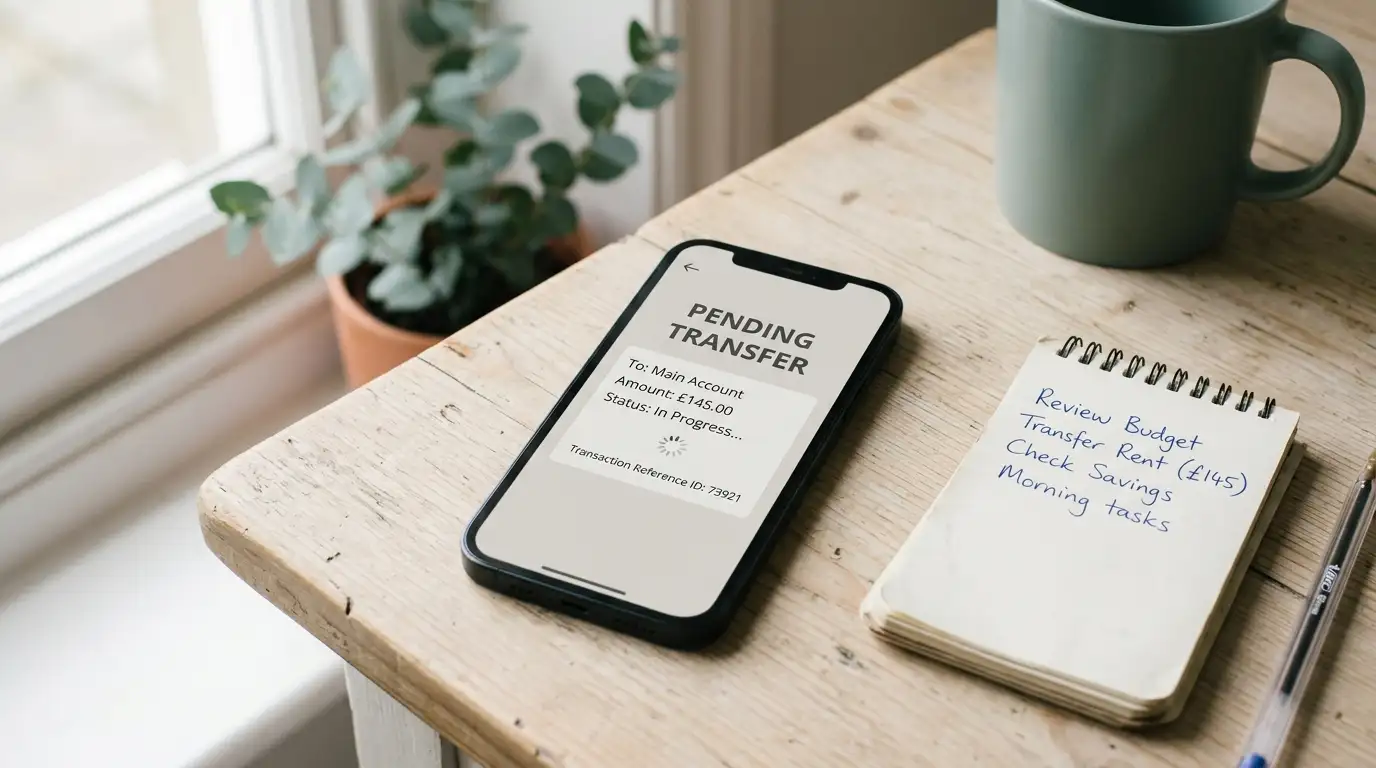
The payment network Australia runs on settles a bank-to-bank transfer in a few seconds, at three in the morning, on a public holiday. Your casino withdrawal takes four hours. Those two facts sit side by side on every quick withdrawal casino page in the country, and almost nobody connects them.
That gap is the whole story. When an operator advertises an instant cash-out, it is describing its own paperwork, not the money’s journey. The transfer itself is over before you have refreshed the page. What you are waiting on is a queue — a risk check, a bonus audit, a look at whether your documents are still current, and, at the slower shops, a human being who clocks off at five.
So this page does two jobs. It ranks the sites Australians can actually reach, with the payout windows each one publishes and the specific clause in each that can undo the speed. And it explains the mechanics underneath, because once you understand where the delay lives, choosing a fast site stops being guesswork.
How Fast a Casino Withdrawal Really Moves in Australia
A withdrawal from an Australian-facing casino has two legs, and they are wildly different lengths. The operator’s internal approval takes anywhere from a few minutes to three days. The payment leg — the part where money leaves the operator’s account and arrives in yours — takes seconds on PayID, minutes on most crypto rails, and a couple of business days only on the old bank and card routes. Nearly all of your wait is the first leg.
Put a number on it. The New Payments Platform, launched in 2018 and now connecting more than a hundred banks, credit unions and fintechs, moves somewhere around seven billion dollars a day and settles individual transfers in well under a minute. Be generous and call a PayID transfer thirty seconds. Now take an operator advertising a two-hour PayID payout. Two hours is 7,200 seconds. The payment network accounts for roughly four-tenths of one per cent of that wait. The remaining 99.6 per cent is the casino thinking about it. Stretch the window to 24 hours and the rail’s share falls below one twenty-fifth of one per cent.
Which reframes the entire shopping exercise. Comparing payment methods is the second-order question. The first-order question is whether the operator approves payouts by rule or by hand, because that single design decision is worth hours or days, while the rail choice is worth minutes.
The approval chain runs in a fixed order, and each link can stall. First a risk check: does the withdrawal pattern look like normal play or like someone cycling deposits through to launder a balance. Then a bonus audit: is there an active promotion with unmet turnover, and did any of your bets breach a maximum stake rule while it was live. Then a verification status check: are your documents on file, current, and matching the account name. Then, at the larger amounts, an anti-money-laundering review. Only after all of that does anything touch a payment network.
The operators publishing ten- and twenty-minute windows have automated the first three of those steps for accounts that have already cleared verification. The ones sitting at 24 to 72 hours are doing some or all of it manually, in business hours, in a time zone that is not yours. Same payment rails. Same technology. A completely different experience on a Saturday night.
Why is my casino withdrawal still pending?
Pending means the operator has not approved the request yet, so no money has been sent. Common causes: unfinished verification, an active bonus with turnover outstanding, a withdrawal method that differs from your deposit method, an amount above a daily ceiling, or a weekend request waiting on a weekday reviewer.
One more thing worth knowing before you look at any ranking. Sites in this niche publish payout times as tested measurements, and virtually none of them describes a methodology you could repeat. Several openly disclose that commercial arrangements may affect how brands are ordered. The figures below are drawn from operator terms and from the timing claims those sites publish — useful as a comparison of what each brand commits to, not as a laboratory result. Treat them as the operator’s own promise, and judge it after your own first cash-out.

Quick Withdrawal Casinos in Australia, Ranked by Real Payout Windows
Ten brands, ordered by the speed each one publishes on its fastest local route rather than by the size of its welcome offer. Every one of them holds an offshore licence, because no Australian jurisdiction issues an online casino licence at all — more on that further down, since it changes what recourse you have when a payout stalls.
| Operator | Licence | Fastest rail | Payout window | Min. withdrawal | Distinguishing feature |
|---|---|---|---|---|---|
| Lucky7even | Curaçao | PayID | 10–20 min | AU$30 fiat, ~20 EUR crypto | PayID and BPAY both live |
| King Johnnie | Offshore, undisclosed | PayID | 0–2 hrs | AU$30 | Fastest published fiat figure, opaque ownership |
| GoldenBet | Curaçao | Crypto | 20–40 min crypto, under 1 hr total | AU$30 | 300% bonus capped at AU$100 cash |
| Neospin | Curaçao | Crypto | 1–3 hrs | AU$30 | AUD-native, ~8,000 titles, 80+ studios |
| SkyCrown | Curaçao | PayID | Under 24 hrs crypto | AU$30 | Largest lobby paired with strong PayID flow |
| 7Bit Casino | Curaçao (Dama N.V.) | Litecoin | 15–30 min | ~20 EUR crypto | Longest crypto track record |
| Wild Tokyo | Offshore | BTC, ETH, XRP | Reported near-instant | ~20 EUR crypto | Live dealer depth plus gamified progression |
| Ricky Casino | Curaçao | Crypto | 1–4 hrs | AU$30 | PayID and Neosurf, 3× wagering on all balances |
| Joe Fortune | Offshore | PayID | 2–6 hrs | AU$30 | AUD-native, strongest mobile client |
| Fair Go | Offshore | eZeeWallet | ~26 hrs e-wallet, ~3.2 days bank | AU$30 | No currency conversion, no max cashout on bonus wins |
Lucky7even — the fastest fiat window on record
Ten to twenty minutes, PayID, on a verified account. That is the quickest fiat figure any brand in this set publishes, and it matters more than a crypto record would, because it means the payout is arriving in an Australian bank account in Australian dollars with no exchange step in between. Lucky7even runs on a Curaçao licence with a lobby past five thousand titles, and its cashier is unusually broad for the cohort: PayID and BPAY on the local side, USDT, Litecoin and Bitcoin on the crypto side, Skrill and Neteller for anyone who still prefers a wallet in the middle.
BPAY is the detail worth pausing on. Almost nobody in this market offers it, and its presence signals an operator that has done real work on Australian banking rather than bolting a PayID badge onto a generic platform. Lucky7even also publishes usable numbers instead of vague reassurance — thirty dollars minimum on PayID, cards and e-wallets, roughly twenty euros equivalent on crypto, and one to five business days if you insist on a card or bank payout. The welcome package runs to AU$3,000 with 200 free spins, which is neither the largest nor the smallest figure here. If your priority is money landing in a Commonwealth Bank account before dinner, this is the shortlist’s top entry.
King Johnnie — top of the PayID table, thin on paperwork
Across a twelve-brand payout comparison, King Johnnie ranked first on PayID speed at roughly zero to two hours. Zero, in that context, means the automated approval fired and the transfer was already on the network. The site carries a large pokies line-up and a familiar Australian-facing cashier, and its welcome offer sits around a 100 per cent match to AU$1,000 with spins attached.
The honest problem is everything behind the front end. Reviewers who go looking for the licence number, the operating company, or a complaints channel report the trail going cold. That is not a small thing when your money is sitting in someone else’s account. A fast payout is only worth something if there is a payout — and with no identifiable licensee and no ombudsman, your leverage in a dispute consists of emailing support and hoping. Fine for a hundred-dollar cash-out on a brand you have used before. A poor place to park four figures while you decide what to do with it.
GoldenBet — sub-hour payouts and a bonus you can actually clear
Crypto in twenty to forty minutes, total withdrawal time under the hour, with some independent roundups reporting figures closer to ten minutes. GoldenBet runs a casino and sportsbook side by side on a Curaçao licence, with PayID for local fiat and Bitcoin, USDT, Litecoin and Jeton in the cashier.
Its welcome offer deserves a mention for being the opposite of the market norm. A 300 per cent match sounds enormous until you notice the ceiling: AU$100 in cash. Everywhere else on this list, headline figures run to five and eight thousand dollars, and every one of them carries turnover requirements that make the money notional. A three-hundred-dollar bonus at a workable multiple is a promotion you might actually clear and withdraw. A five-thousand-dollar bonus at 40× turnover is a marketing number. GoldenBet accidentally offers the more honest deal by having smaller ambitions.
Neospin — built for Australian banking from the start
Launched in 2022 on a Curaçao licence, Neospin was designed for this market rather than adapted to it. Around eight thousand titles from more than eighty studios, AUD-denominated balances, PayID alongside cards and crypto, a browser client and an app, 256-bit encryption on cashier traffic and support running around the clock. Crypto cash-outs land in the one-to-three-hour band. Attribution of the operating company differs between sources — two different legal entities are named across public write-ups — so treat the corporate detail as unconfirmed even though the licence jurisdiction is consistent.
The AUD-native point is the substantive one. When your balance is held in Australian dollars and paid out in Australian dollars, there is no conversion spread eating the edges of your win. That sounds obvious until you compare it with a crypto-first site where you deposit in AUD, play against a converted balance, withdraw in USDT and then sell that USDT on an exchange — three conversion points, each taking a slice. Neospin is the pick for a player who wants speed without the currency gymnastics, and it is the brand most consistently named at the top of Australian payout comparisons.
SkyCrown — the best PayID flow paired with the biggest lobby
SkyCrown arrived in 2023 and grew fast. Counts of its library range from five thousand to eight thousand titles depending on when the count was taken, which puts it at or near the top of this group, and it pairs that with full AUD support, live dealer tables and crypto withdrawals clearing inside 24 hours. Among Australian-facing brands it rates highest specifically on PayID flow — the fiat path, not the crypto one, which is the harder thing to get right.
It also supplies an unintentional lesson in reading promotional copy. Depending which page you land on, SkyCrown’s welcome bonus is AU$3,000 with 120 free spins, or AU$8,000 with 400. Same casino, same month. Licence permit numbers cited for it also conflict between sources. None of that makes the operator dishonest — affiliate pages recycle stale terms constantly — but it does mean the only bonus figure worth believing is the one inside your own account after you have logged in and read the terms attached to your specific offer. Everything else is decoration.
7Bit Casino — the crypto veteran
Fifteen to thirty minutes on Litecoin, and a track record longer than most of this list combined. 7Bit runs under Dama N.V. on a Curaçao licence, which makes it one of the better-documented licensees in the cohort — you can actually establish who operates it. The cashier covers Litecoin, Bitcoin, Dogecoin, Ethereum and USDT, with AUD play supported alongside.
Two caveats. The bonus presentation is a mess: the same page cites a package “up to AU$7,500 with 250 free spins” in one place and “325 per cent up to AU$10,800” in another, while the AUD-facing version of the offer is a considerably more modest 100 per cent to AU$400 with 100 spins. And the support timing is genuinely awkward for Australians — peak coverage falls around two in the morning Sydney time, which is why Australian ratings for the brand run below European ones. When the payout is automated that hardly matters. When something goes wrong at nine on a Sunday evening, it matters a great deal.
Wild Tokyo — fast cash-out with real live-dealer depth
Bitcoin, Ethereum and Ripple in the cashier, AUD banking alongside, and a reputation across 2026 roundups for paying close to instantly. What separates Wild Tokyo from the crypto-first crowd is that the lobby is not a pokies warehouse with a token live section — the live tables are a genuine part of the offering, and the site layers progression mechanics over the top with achievements, daily tournaments and an in-game currency called Coins that you accumulate and spend.
The library is built for players who care about the numbers. Big Bass Splash sits in there at a 96.71 per cent RTP as the recognisable anchor, with a Megaways row for higher volatility and a dedicated Bonus Buy tab if you would rather pay for the feature than grind for it. The advertised welcome package reaches AU$8,000 with 200 free spins, and the usual arithmetic applies. Worth knowing if you plan to mix live blackjack into your session: table games often contribute little or nothing toward bonus turnover, so a live-heavy player who claims a promotion can end up further from a withdrawal after an hour of play than when they started.
Ricky Casino — local rails, sharp terms
AUD throughout, PayID and Neosurf for deposits, crypto withdrawals advertised inside one to four hours, Curaçao licence. Neosurf is a deliberate inclusion — it lets players fund an account with a voucher bought in cash at a newsagent, which suits anyone who would rather their bank statement stayed quiet. Note that vouchers are a deposit route only. Nothing comes back that way.
Then the terms, which are where Ricky earns its place in a discussion about withdrawal speed for exactly the wrong reason. Reviewers report a 3× wagering requirement applying to deposits even when no bonus has been claimed, plus a AU$5 maximum bet ceiling while any promotion is active. Read those together. A player who deposits, takes a bonus without noticing the cap, and puts through one careless AU$10 spin has just handed the operator grounds to void the resulting balance. The payout rail is quick. Whether there is anything left to pay out is a separate question, and it is decided in the terms, not the cashier. This is the brand where reading the fine print earns its keep.
Joe Fortune — the realistic middle
Two to six hours on PayID. Not the fastest number on this page, and that is precisely why it is useful — it is what a well-run operator without fully automated approval actually delivers. Joe Fortune has been serving Australians for years, holds an offshore licence, keeps balances in AUD and runs one of the better mobile clients in the market, which counts for something if you play on a phone in a train carriage rather than at a desk.
Its welcome package climbs to AU$7,500 across five separate deposits at 40× wagering on most offers, and that structure is worth walking through, because it explains why staged bonuses slow withdrawals. Take the first tranche only — say AU$100 of bonus at 40× — and you need AU$4,000 of turnover before the balance is withdrawable. If the terms apply the multiple to deposit plus bonus, it is AU$8,000. Pokies usually contribute 100 per cent of each bet toward that; live dealer often 50; blackjack and roulette frequently nothing. Now multiply across five deposits chasing the full AU$7,500 and you are looking at a turnover figure with an uncomfortable number of zeroes, inside a time-limited window. The “gift” is real. It is also a job, and the casino is not a charity handing out wages.
Fair Go — slow, and not the same thing as unreliable
Running since 2017 on Realtime Gaming software, Fair Go is the oldest brand here and one of the slowest: up to two business days as a rule, with reported averages of roughly 26 hours on e-wallet and 3.2 days on bank transfer. Even crypto totals something like three to five days once the internal pending period is counted, which sits oddly next to cashier copy promoting fast payouts. Its lobby is smaller and more dated than the aggregator-driven catalogues above, since RTG supplies it alone rather than pulling from eighty studios.
But slow and unreliable are different failures, and Fair Go only commits the first. Three documented test withdrawals at AU$150, AU$400 and AU$1,200 all completed. AUD payouts are processed without currency conversion, so what you win is what arrives. And deposit-bonus winnings carry no maximum cash-out ceiling — unusual, and genuinely valuable, because a promotion that caps your withdrawal at a multiple of the bonus is the single most common way a large win evaporates. Fair Go also enforces a weekly cash-out ceiling, which is the constraint that actually bites: a five-figure win does not arrive in one piece regardless of how patient you are. For a grinder taking out a few hundred dollars a week, none of that registers. For someone who has just hit a jackpot, it is the difference between a payout and an instalment plan.
What is the fastest withdrawal casino for Australian players in 2026?
On published figures, Lucky7even leads on fiat at 10–20 minutes via PayID, with King Johnnie close behind at 0–2 hours. GoldenBet and 7Bit are quickest on crypto at 20–40 and 15–30 minutes. All require completed verification first — an unverified account will not see those windows regardless of brand.

How We Ranked These Sites
Six things decide the order above, and payout speed is only the first of them.
Whether approval is automated comes first, because that is where the hours live. A site that clears verified accounts by rule will beat a site with a better payment menu and a human reviewer every single time. Second, which rails are actually live for Australian accounts — a PayID badge on a landing page means nothing if the option is greyed out in the cashier for AU players. Third, published limits: a minimum you can hit and a daily ceiling you can live with. Fourth, whether verification is genuinely one-off or gets re-triggered. Fifth, fee treatment, including the conversion cost that never appears on a fee schedule. Sixth, whether the terms contain a clause capable of voiding a legitimate balance — maximum bet caps, wagering applied to non-bonus deposits, cash-out ceilings on promotional winnings.
Now the part most pages in this niche leave out. Every payout figure published anywhere in this market, including on this page, traces back to two sources: what the operator states in its own terms, and what comparison sites report from their own unaudited testing. Nobody independently audits casino withdrawal speeds in Australia. There is no regulator collecting the data, because the activity is not licensed here. Several of the largest comparison sites in this space disclose, in their own small print, that commercial relationships can influence how brands are ordered — one states outright that compensation “could impact their ranking.”
Which produces exactly the mess you would expect. One widely-read comparison page lists the same operator as offering instant withdrawals in one table and sitting in a 24-to-72-hour risk band in another, on the same page. Another quotes two different bonus figures for the same brand in two adjacent sections. These are not conspiracies; they are stale data and copy-paste. But they are a good reason to treat any number in this niche as a starting hypothesis rather than a finding.
So the useful advice is procedural. Deposit small — thirty dollars clears most minimums. Complete verification immediately, before you have anything worth withdrawing. Play a little, then request a modest cash-out and time it yourself. That single test tells you more about an operator than every ranking on the internet, because it measures your account, your bank and your documents rather than someone else’s.
Cash-Out Methods Ranked by Actual Speed
| Method | Rail settlement | Typical total wait | Minimum | Cap | Payout route |
|---|---|---|---|---|---|
| PayID | Seconds, 24/7 | 10 min – 4 hrs | AU$30 | AU$1,000–5,000 daily | Yes |
| USDT (TRC-20) | ~10 min | 15–60 min | ~20 EUR | Operator terms | Yes |
| Litecoin | ~10–30 min | 15–45 min | ~20 EUR | Operator terms | Yes |
| Bitcoin | ~15–45 min | 30 min – 3 hrs | ~20 EUR | Operator terms | Yes |
| Ethereum | ~15–60 min | 30 min – 3 hrs | ~20 EUR | Operator terms | Yes |
| Skrill, Neteller, MiFinity | Minutes | Same day | AU$30 | Operator terms | Yes |
| Debit card | 1–3 days | 3–5 days | AU$30 | Operator terms | Yes |
| Bank transfer | 1 day | 2–5 business days | AU$30 | Weekly ceilings apply | Yes |
| Neosurf, BPAY | Not applicable | Not applicable | Not applicable | Not applicable | Deposit only |

PayID and the NPP rail underneath it
PayID is not a payment method. That misconception is why so much confusion surrounds it. It is an addressing service — a way of pointing a payment at a mobile number, an email address or an ABN instead of a BSB and account number. Underneath, the money travels over the New Payments Platform, the real-time settlement network Australian banks built and switched on in 2018. Australian Payments Plus operates it, more than a hundred institutions connect to it, and it clears somewhere around seven billion dollars daily on a genuine 24/7 basis. The Reserve Bank’s own payments research records rising consumer adoption of account-to-account methods, PayID among them. This is mainstream national infrastructure, not a gambling-industry workaround.
Two consequences follow. Nothing resembling a card number ever reaches the operator, because the alias resolves inside the banking system rather than at the merchant — which is a real privacy gain when the merchant is an offshore casino. And the settlement leg genuinely is seconds, which is why every hour of a PayID payout wait belongs to the casino, not the network.
The practical limits are worth knowing. Deposits land in 30 to 90 seconds. Withdrawals typically clear a AU$1,000 to AU$5,000 daily band without friction; above that, operators start batching payments and asking for additional verification. Your bank has opinions too. Commonwealth Bank is widely reported to flag or decline gambling-related transactions, and NAB and Westpac both rate faster on deposits than on withdrawals because of their own checks. None of that is the casino’s doing, and no amount of choosing a fast operator will route around it.
Crypto: USDT, Litecoin and Bitcoin
On raw speed, crypto wins — but not by the margin the marketing implies, and not uniformly across coins. USDT on the TRC-20 network is the most consistent performer, reported credited within about ten minutes and largely immune to the congestion that affects other chains. Litecoin sits close behind at ten to thirty minutes with lower costs than Bitcoin. Bitcoin itself runs fifteen to forty-five minutes and remains the preferred route for larger sums, where the fixed cost matters less as a proportion. Ethereum performs similarly to USDT on timing but carries gas fees that fluctuate with network demand, which makes the cost of a small withdrawal unpredictable.
There is a reason crypto features so heavily on the sites ranking for Australian withdrawal searches, and it is regulatory rather than technical. The Interactive Gambling Amendment (Credit and Other Measures) Act 2023 removed credit cards, credit-related products and digital currency as funding methods for licensed online wagering from 11 June 2024. Licensed Australian bookmakers cannot touch crypto. Offshore casinos sit entirely outside that regime, so the rail remains open to them — and became a competitive advantage precisely because the regulated side lost it.
The catch is arithmetic rather than timing. Fast is not the same as cheap. If you deposit AUD, play a converted balance, withdraw USDT and then sell it on an Australian exchange, you have paid a spread at each conversion plus the exchange’s fee, and you owe yourself a record of it for tax purposes. A twenty-minute payout that costs two per cent in spread nets you less than a two-hour PayID transfer that costs nothing.
E-wallets: Skrill, Neteller, MiFinity
The middle lane, and a shrinking one. Skrill, Neteller, MiFinity and Jeton all appear across this cohort’s cashiers, and all clear within minutes of operator approval, putting them functionally level with PayID on speed. Skrill tends to approve faster than Neteller, where currency conversion adds a step.
Their remaining advantage is a buffer between the casino and your bank — useful if your institution takes a dim view of gambling merchants. Their disadvantage is a second account with its own fees, its own verification, and its own withdrawal step to get money from the wallet into your bank. For an Australian with PayID available, a wallet mostly adds a hop. For someone whose bank keeps declining transactions, that hop is the point.
Cards and bank transfer
Debit card payouts take three to five days and bank transfers two to five business days, and neither number is the casino’s fault. Card refunds travel back through the card scheme’s clearing cycle; bank transfers to offshore operators route through correspondent banking rather than the domestic NPP. Both are legacy paths.
Use them for one thing: large, non-urgent cash-outs. A five-figure win pushed through a daily-capped PayID limit arrives in instalments over a week. The same amount by bank transfer arrives once, in three days, in a single line on your statement. Slower on paper, faster in practice, and considerably less painful.
Neosurf and BPAY, deposit-only
Both appear in Australian cashiers and neither pays out. Neosurf is a prepaid voucher bought with cash — a legitimate privacy tool, and a hard spending cap, but the money only travels one direction. BPAY, live at Lucky7even and rare elsewhere, is a bill-payment rail also used for funding rather than payouts. Deposit through either and you will need a second method for the withdrawal, which means completing verification on that second method too. Sort that out before you win, not after.
Is crypto faster than PayID for casino withdrawals in Australia?
Marginally, and often not at all. USDT clears in roughly ten minutes against PayID’s seconds of settlement — PayID is faster on the rail. Crypto only wins where an operator approves crypto automatically but reviews fiat manually. Where both are automated, PayID arrives sooner and costs no conversion spread.
Why do bank transfer payouts take days when PayID takes minutes?
They use different infrastructure. PayID rides the New Payments Platform, which settles continuously and around the clock. Bank transfers from offshore operators travel through correspondent banking and traditional clearing cycles, which run in batches on business days. Same money, different plumbing, three days of difference.
Limits, Caps and Fees That Decide When Your Money Arrives
Speed gets the headlines. Limits decide the outcome.
Minimum withdrawals
Thirty Australian dollars is the working floor across this cohort on PayID, cards, bank transfer and e-wallets. Crypto minimums are set in euros rather than AUD — roughly twenty euros equivalent, which lands near AU$33 depending on the rate on the day. That distinction matters if you are cashing out small: a AU$30 balance clears a fiat minimum and fails a crypto one.
Below the minimum, the money is not lost, but it is stuck. Balances under the floor either sit until you top them up through further play or, at some operators, get written off after a dormancy period. Check the dormancy clause if you plan to leave a small balance sitting — a handful of operators in this market charge monthly inactivity fees against it.
Daily and weekly ceilings
This is the constraint that catches people out, and it is barely mentioned anywhere in the market. PayID withdrawals typically pass a daily band of AU$1,000 to AU$5,000 without additional friction. Request more and two things happen: the operator batches the payment across multiple days, and the amount trips an enhanced verification review.
Weekly ceilings sit above that and are where a genuinely large win meets reality. Fair Go enforces one explicitly. Most operators here have one whether or not they advertise it prominently. The mechanic is straightforward — win AU$20,000 against a AU$5,000 weekly ceiling and you are collecting for a month, in four instalments, each one potentially re-triggering a review. No operator on this list will hand over a jackpot in one transfer on a Tuesday afternoon, and any site implying otherwise is selling you something.
Which is why the fastest-payout question changes shape at scale. For a AU$300 cash-out, the operator’s approval automation is the whole game. For a AU$30,000 cash-out, the ceiling structure matters far more than whether approval takes twenty minutes or two hours, and the right choice may well be the slower operator with the higher cap.
Currency conversion, the fee nobody quotes
No operator on this page publishes a fee schedule. What they publish instead is relative reassurance — no fees on crypto, low fees on transfers — and the real cost sits somewhere that never appears on a schedule at all.
Run the two paths side by side. Path one: an AUD-native account, AUD balance, PayID withdrawal in AUD. Zero conversion. Fair Go states this explicitly, and it is one of the reasons a slow operator can beat a fast one on net proceeds. Path two: deposit AUD, the operator converts to its base currency, you play, you withdraw in USDT, then you sell that USDT on an Australian exchange for AUD. Three conversion points, each with a spread, plus the exchange’s trading fee, plus a network fee on the transfer. None of it is itemised as a charge. All of it comes out of your win.
On a AU$200 withdrawal, that difference is background noise. On a AU$5,000 withdrawal it is real money, and it inverts the ranking: the twenty-minute crypto payout can easily net less than the two-hour AUD transfer. Speed and value are separate axes, and the entire market talks about only one of them.
What is the minimum withdrawal at a quick withdrawal casino?
Around AU$30 for PayID, cards, bank transfer and e-wallets across the operators listed here. Crypto minimums are set in euros — roughly twenty euros equivalent, near AU$33. A balance sitting below the floor cannot be withdrawn at all, so check the threshold before you plan a small cash-out.
Do quick withdrawal casinos charge fees to cash out?
Rarely as an explicit charge. The real cost is currency conversion — deposit in AUD, play a converted balance, withdraw in crypto and sell it, and you pay a spread at each step. An AUD-native account paying out via PayID avoids all of it. Bank transfers may carry a bank-side fee.

Verification, and What “No Verify” Actually Means
Verification is the single largest cause of a delayed first payout, and it is also the most misunderstood item in this market, because the legal position is not what most players assume.
Australia’s anti-money-laundering framework tightened materially on 31 March 2026, when a reform package commenced that simplified obligations while sharpening the customer due diligence rules. For gambling operators inside the regime, the due diligence threshold dropped from AU$10,000 to AU$5,000. Threshold transaction reports for physical currency of AU$10,000 or more must be lodged within ten business days. Existing reporting entities have a three-year transition for initial due diligence on legacy customers, running from 31 March 2026 to 30 March 2029.
Here is the part nobody explains. Those obligations bind Australian reporting entities — licensed wagering operators, banks, payment providers. A casino licensed in Curaçao is not an Australian reporting entity and is not subject to AUSTRAC’s rules. So when an offshore casino asks for your driver’s licence and a utility bill, it is not complying with Australian law. It is complying with its own licence conditions and, more pressingly, with the demands of the banks and payment processors that give it access to the financial system. Lose those relationships and the operator has no cashier at all.
Which tells you exactly how much weight to give a “no verification” claim. An operator that genuinely never checks identity has no serious banking partner, and an operator with no serious banking partner is a poor place to be holding a balance. What “no KYC” usually means in practice is deferred KYC — deposit and play freely, then produce documents when you try to withdraw, which is the worst possible sequencing from your side. You have already committed money before discovering whether the paperwork clears.
The friction points are consistent and avoidable. Documents must be legible, which sounds trivial and accounts for a large share of rejections. The name on your account must match the name on your payment method exactly. Proof of address generally cannot be older than ninety days. Manual reviews run anywhere from thirty minutes to a full day. And re-verification gets triggered by three things specifically: changing your withdrawal method, requesting an unusually large amount relative to your history, or a mismatch between submitted documents.
The direction of travel is more checking, not less. The Australian regulated side is verifying earlier and more often, banking partners propagate similar expectations outward to offshore operators, and no operator in this market is heading toward looser identity requirements. Front-load it and the cost is one afternoon, once.
Can you withdraw from an online casino without ID verification in Australia?
Not reliably. Some offshore operators defer verification until your first withdrawal, which is marketed as “no KYC” but simply moves the check to the worst moment. Any site processing real payouts has banking partners demanding identity checks. Complete verification before you deposit, not after you win.
Bonuses, Wagering and the Slow Lane
Search volume for quick withdrawals on pokies and slots suggests players think the game type affects payout speed. It does not. A win on Big Bass Splash and a win on live blackjack travel the same rail and sit in the same approval queue. What the game type changes is whether you can withdraw at all while a promotion is running, and that is a mechanical connection worth understanding because it is responsible for more stalled cash-outs than any payment problem.
Bonus turnover is calculated on bets, and not all bets count equally. Pokies usually contribute 100 per cent of the stake toward the requirement. Live dealer games commonly contribute 50. Blackjack and roulette frequently contribute nothing at all, and free spin winnings often sit outside the calculation entirely. A player who claims a promotion and then spends the evening at a live table can genuinely finish with less turnover credited than when they started the session — the money moved, the counter did not.
The scale of what you are agreeing to is easy to underestimate. Joe Fortune’s package illustrates it cleanly: up to AU$7,500 across five deposits at 40× wagering on most offers. Take just the first tranche at AU$100 of bonus and 40× applies to AU$4,000 of turnover. If the terms compute the multiple on deposit plus bonus — a common variation — it is AU$8,000. Chase the full AU$7,500 across all five tranches and the required turnover runs well into six figures, inside a time-limited window, at 100 per cent contribution only if you stay on pokies the entire way. Miss the window and the bonus and its winnings vanish.
Then the clauses that void rather than delay. Ricky Casino applies a 3× requirement to deposits even with no bonus claimed, and caps individual bets at AU$5 while a promotion is active. A single AU$10 spin during an active bonus is grounds to void the balance it produced. Fair Go, by contrast, applies no maximum cash-out to deposit-bonus winnings, which is the more generous position and rarer than it should be — plenty of operators cap promotional winnings at a multiple of the bonus, so a AU$50 “free” bonus that turns into AU$4,000 pays out AU$500 and the rest simply evaporates. Read that clause before any other. It is the one that decides whether a good night converts into money.
The blunt version: if speed is what you want, decline the bonus. A plain-cash balance carries no turnover audit, no maximum bet exposure, no contribution table and no cash-out ceiling. It approves faster because there is less to check. Bonuses are a trade of withdrawal flexibility for notional value, and casinos are not in the business of giving money away — that AU$8,000 headline is a customer acquisition cost with strings, not a present.
Does claiming a bonus slow down a casino withdrawal?
Yes, in two ways. Unmet turnover blocks the withdrawal entirely until cleared. And even with wagering complete, bonus-linked withdrawals get audited for maximum bet breaches and game contribution, adding review time. A plain cash balance skips both checks and approves faster.

The Legal Position, and Why Every Site Here Is Offshore
Under the Interactive Gambling Act 2001, providing online casino games to a person physically present in Australia is a prohibited act. Pokies, table games, live dealer — all of it. No Australian jurisdiction issues an online casino licence, and none is planned. Australian online licensing extends to race and sports wagering, lotteries and keno, which is why Sportsbet and TAB can advertise on television while every operator on this page cannot.
The prohibition binds the provider, not you. No Australian law penalises an individual for playing at an offshore casino, and no Australian has been prosecuted for it. That asymmetry is deliberate: the framework targets supply.
Enforcement is active and getting more so. ACMA — the Australian Communications and Media Authority — has had more than 1,700 illegal gambling and affiliate websites blocked by Australian internet providers since its first blocking request in November 2019, and over 230 offshore operators have withdrawn from the market under that pressure. The blocking is worth taking seriously as an operational risk rather than as background noise: if the site holding your balance gets blocked, you keep an account you cannot easily reach, and your recovery options run through the operator’s support desk rather than through anyone with authority over it. Recent enforcement has extended to prediction markets and to self-exclusion breaches, and a cross-agency taskforce targeting fraudulent casino sites was announced in 2026.
Which brings the real consequence into focus, and it is not a legal one. It is that there is no local recourse. When a licensed Australian wagering operator stalls a payout, there is a state regulator and an ombudsman with teeth. When a Curaçao licensee stalls a payout, your options are the operator’s own complaints process and, in theory, the Curaçao regulator — a body on the other side of the planet with no practical interest in an individual Australian’s AU$800. No AFCA, no state regulator, no BetStop-style register covering casino play. That absence, not the payout window, is the genuine risk in this market, and it is the argument for keeping balances small and withdrawing often rather than letting winnings accumulate in someone else’s account.
The credit card position is a useful footnote on how the two regimes diverge. The Interactive Gambling Amendment (Credit and Other Measures) Act 2023 banned credit cards, credit-linked products and digital currency as funding methods for licensed online wagering from 11 June 2024, bringing online into line with the long-standing rules in pubs and clubs. Offshore casinos are outside that regime and kept both. So the regulated Australian market lost crypto access at exactly the point the unregulated one was building its payout speed around it.
Are online casino withdrawals legal in Australia?
Offering online casino games to Australians is prohibited under the Interactive Gambling Act 2001, but playing is not an offence for the individual, and receiving your own winnings is not illegal. The practical consequence is a lack of recourse: no Australian regulator or ombudsman can compel an offshore operator to pay.

Habits That Cut Your Waiting Time
Each of these removes a specific link from the approval chain rather than vaguely helping.
- Complete verification before your first deposit. This deletes the document check from your first withdrawal entirely, which is the single largest delay in the whole sequence.
- Use one payment method for both directions and never change it. Switching routes re-triggers verification, and matching deposit and withdrawal methods is a condition at most operators anyway.
- Request cash-outs on a weekday morning, Australian time. Manual reviewers work business hours in their own time zone, and weekend requests demonstrably lag.
- Keep individual withdrawals inside the daily band. A AU$3,000 request clears; a AU$12,000 request gets batched and reviewed.
- Skip the bonus when you want speed. No turnover audit, no maximum bet check, no contribution table.
- Take screenshots of promotional terms at the moment you opt in. Terms change, and your screenshot is the only record of what you actually agreed to.
One thing not on that list: chasing the site with the lowest advertised number. The difference between a twenty-minute operator and a two-hour operator is ninety minutes. The difference between a verified account with a matched payment method and an unverified account switching from card to crypto is three days. Your own preparation outweighs the brand choice by an order of magnitude, which is not what any comparison page wants to tell you.
There is also a cashier feature worth disabling if your operator offers it. Some platforms let you reverse a pending withdrawal and put the money back into your balance — presented as flexibility, functionally a mechanism for talking you out of your own win during a manual review window. If the option exists, the pending period is not neutral waiting time. It is an opportunity, and not for you.
How long does a PayID casino withdrawal actually take?
Deposits land in 30 to 90 seconds. Withdrawals take ten minutes to four hours at the faster operators, and up to 24 hours at slower ones, on a verified account. The payment network itself settles in seconds — the rest is the operator’s approval queue, so the brand matters far more than the rail.
Playing Within Limits
Fast withdrawals cut both ways. Money that arrives in fifteen minutes is money that can be redeposited in fifteen minutes, and the friction that used to sit between a win and the next session has largely been engineered out. Worth being honest with yourself about which of those two effects you are actually buying.
If gambling has stopped being entertainment, the support that exists is free and confidential. Gambling Help Online runs a 24/7 national service on 1800 858 858. BetStop, the National Self-Exclusion Register, launched in August 2023 and has taken more than 30,000 registrations, with close to 40 per cent of registrants choosing a lifetime exclusion — it covers licensed Australian wagering operators rather than offshore casinos, so it will not block the sites on this page, but the underlying decision is the same one. Deposit limits set inside your own account and blocking rules configured through your bank close part of that gap. All gambling requires you to be 18 or over.
Withdrawal speed is a convenience feature. It is not an edge, and the house edge does not shrink because your payout arrived before dinner.
Fast Withdrawal Casinos Australia 2026 — Instant Payouts Ranked
Content created by the «PokiePay» team